Frequently Asked Questions
Does Chapman offer a Password Manager tool?
How do I reset my password from the Windows Login screen?
How often do I need to change my password?
The system will prompt you to change your password every 365 days. You will receive an email approximately two weeks before your password expiration date, reminding you to reset your password.
How do I change my password on both the network and my Mac (NoMAD)?
NoMAD (Jamf Connect) is a tool designed to streamline user authentication and account management for macOS devices, particularly in environments that utilize cloud identity services. It allows users to authenticate using cloud identity providers, making it easier to manage accounts without relying solely on local Active Directory. This helps you avoid Keychain prompts and other authentication frustrations.
Important considerations:
- You can change your password by clicking the reset password button at the top of this page or using NoMAD.
- NoMAD only works when you are connected to Chapman's network via Eduroam or Ethernet. If you are resetting your password off-campus, please click on the "Click to Reset Your Password" button above.
- If you have already reset your password by clicking the button at the top of this page or by visiting mysignins.microsoft.com, you do not need to reset it again.
- Changing your password with NoMAD will change your computer login password to the new one.
Your Mac should have a utility installed called NoMAD. It appears as a triangle icon in your Mac's menu bar. If you do not see a triangle icon in your menu bar, navigate to the Applications folder and double-click the NoMAD icon to launch it.
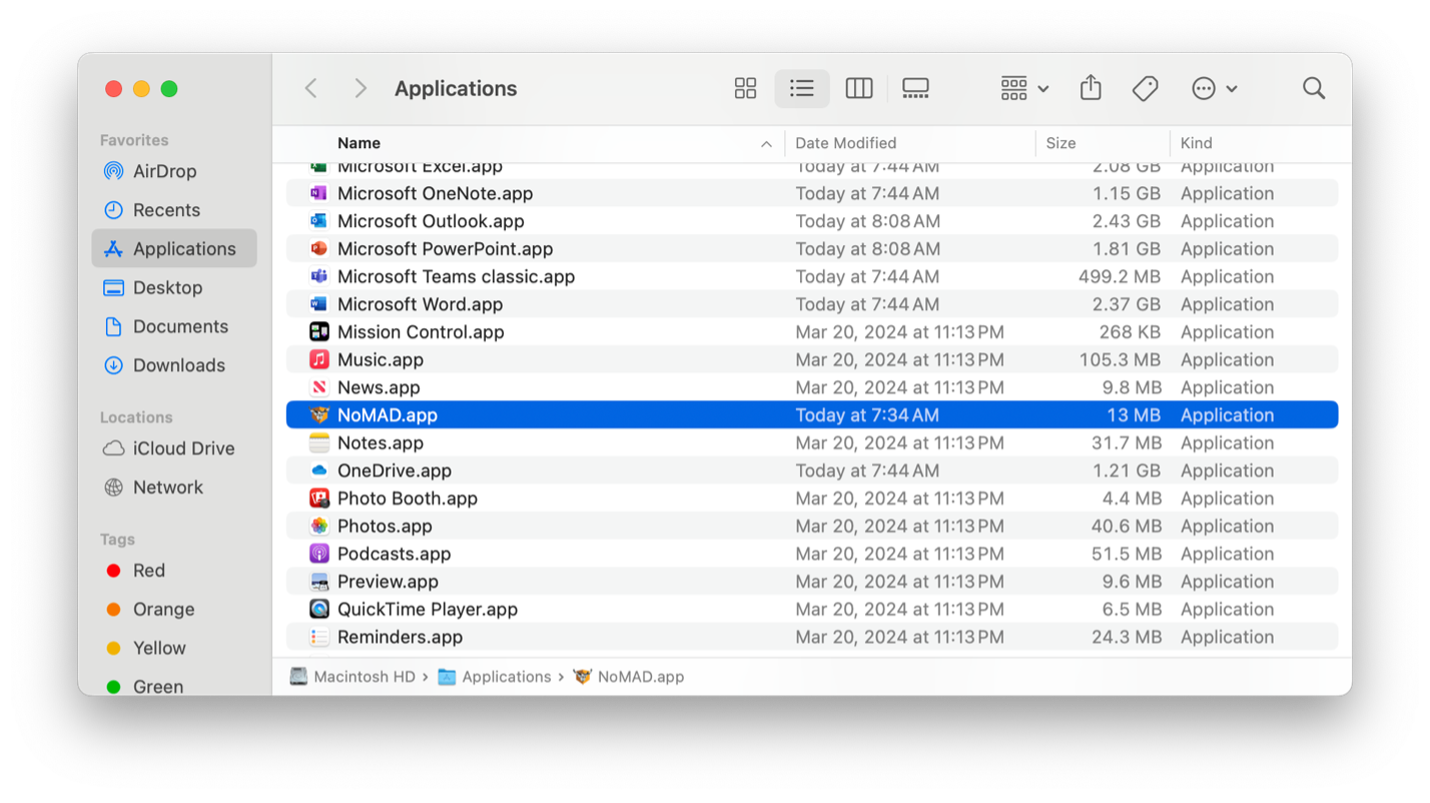
If the triangle icon has a green checkmark, please skip to Step 4 below.

If the triangle icon does not have a green checkmark, please continue with Step 1 below.
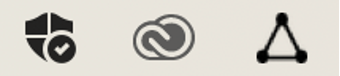
- Click the Triangle icon in the menu bar (near the wifi icon) and select Sign In.
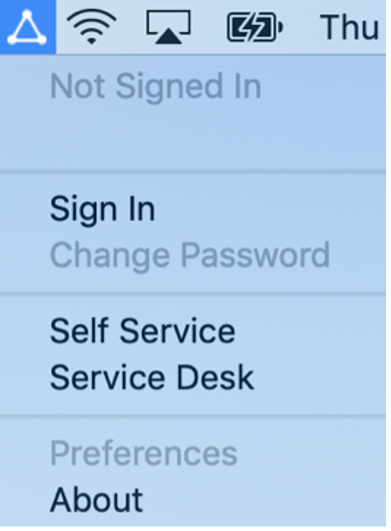
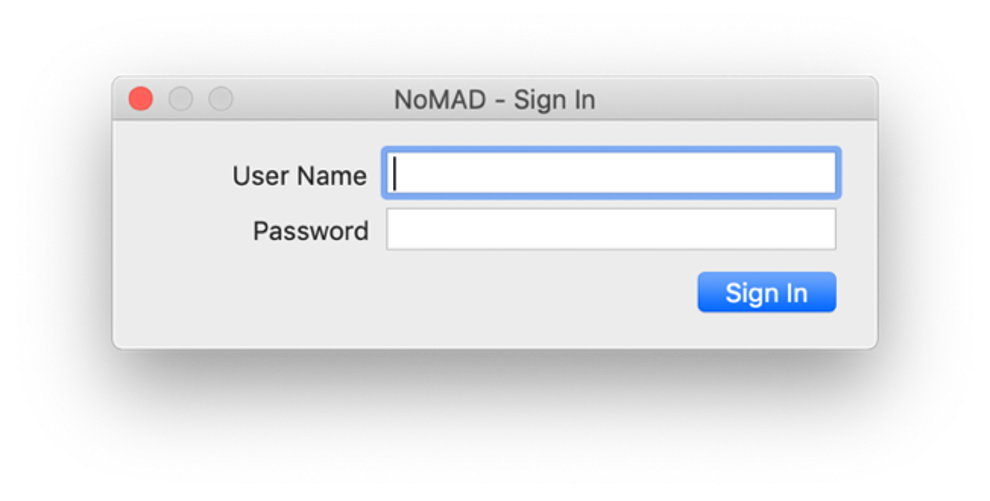
- Sign in using your Chapman network credentials.
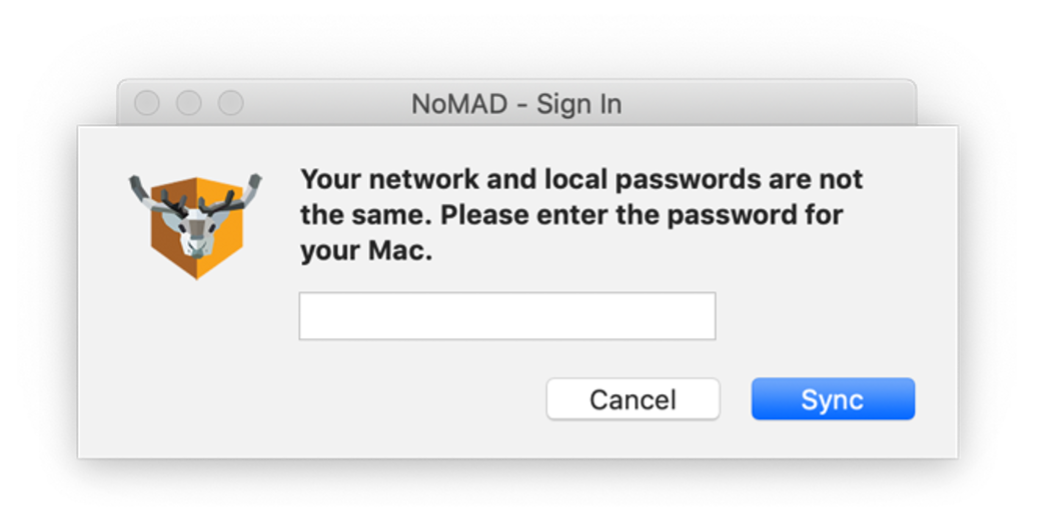
- If your Mac's password does not match your Chapman password, you will be prompted to enter your Mac's password so NoMAD can sync them.
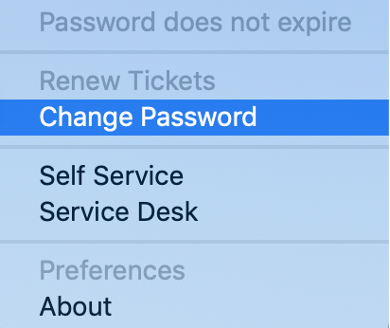
- Once logged into NoMAD, click the triangle icon and select Change Password.
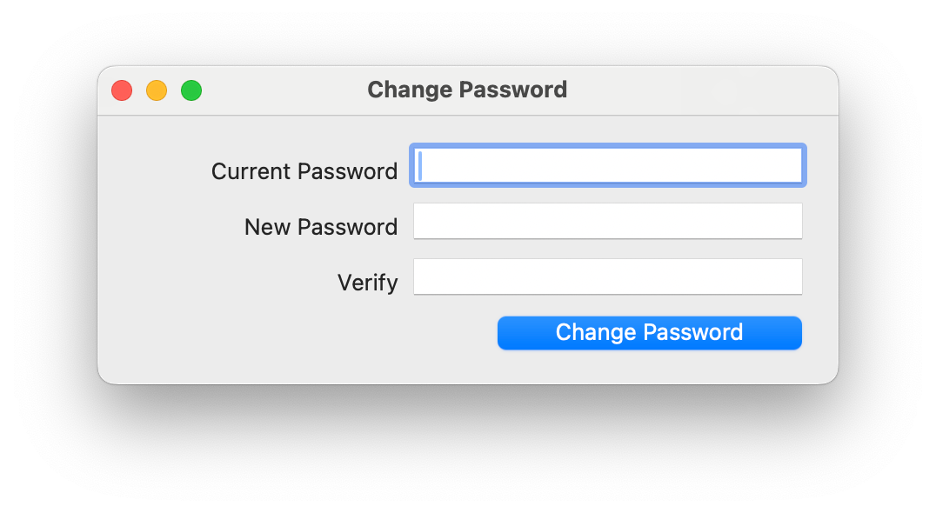
- A Change Password window will open. Fill in the three fields and click on the Change
Password button. Please note: the password change may take a few minutes, so don't
be alarmed if it doesn't happen immediately.
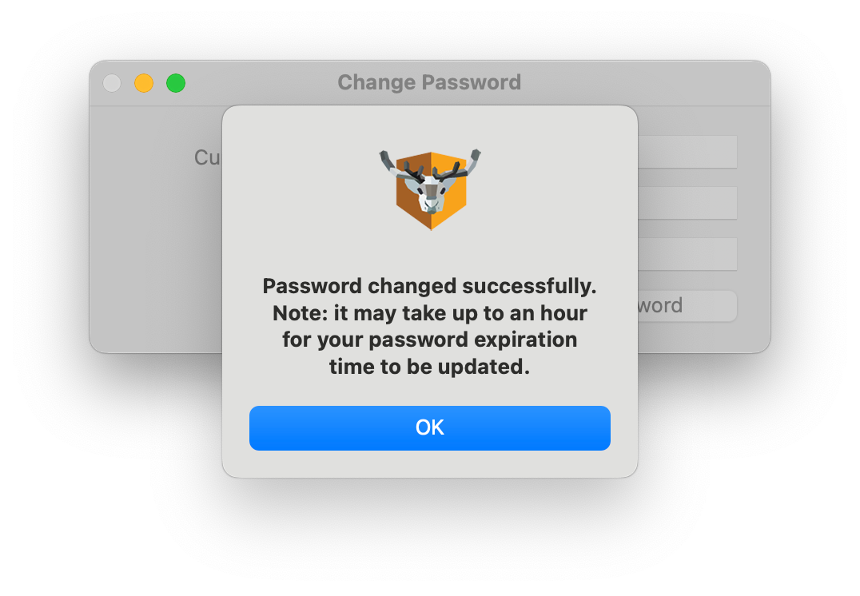
- Once complete, NoMAD will notify you that the password was changed successfully. Click
OK to close the window.
Who do I contact if I have forgotten my password or need help?
If you have enrolled your account in the Self-Service Password Reset tool, you can go to password.chapman.edu, enter your email, and click Next. n the next screen, select "Forgot my password." Follow the instructions to reset your password.
Contact the Service Desk if you need help.What if I have a mobile device?
What are Passkeys and why are they recommended?
Passkeys are a modern sign-in method that makes accessing your accounts easier, faster, and more secure than traditional passwords.
A passkey replaces your password with a unique digital credential that is securely stored on a trusted device, such as your smartphone, tablet, or computer. Instead of remembering or typing a password, you verify your identity using the same method you use to unlock your device, such as a fingerprint, facial recognition, or PIN.
Unlike passwords, passkeys cannot be guessed, reused, or stolen through phishing emails or fake websites. Each passkey is tied to the specific service or website it was created for and only works on legitimate sign-in pages. This makes passkeys significantly more resistant to common cyberattacks and helps protect your account even if you accidentally click on a malicious link.
In addition to improving security, passkeys simplify the sign-in experience. There's no need to create, remember, or reset complex passwords, making everyday access to your accounts both more convenient and more secure.
Think of a passkey as a digital key that stays on your trusted device. Only you can
use it, and it only works for the account it was created to access.
At Chapman University, passkeys help protect your Microsoft 365 account and university
resources while reducing reliance on passwords. Setting up a passkey is an important
step toward a simpler, more secure sign-in experience.
Additional FAQs:
Is biometric sign-in the same as a passkey?
No. A passkey is a credential used to sign in to supported online services. Biometric
sign-in is a way to unlock and authenticate on a device. Biometric authentication
is often used to unlock and approve the use of a passkey.
Do I have to use my fingerprint or face?
No. Most devices also support a PIN or password as an alternative authentication method.
What if my computer does not have biometric hardware?
You can continue using a PIN on Windows or a password on Windows or macOS. Biometric
authentication is optional and depends on your device's capabilities.
What happens if fingerprint or facial recognition stops working?
You can sign in with your PIN, password, or another available authentication method,
then reconfigure your biometric settings.
Can I add multiple fingerprints?
Yes. Both Windows and macOS support registering multiple fingerprints on supported
devices.
What if I replace or lose my phone?
Contact the IS&T Service Desk for assistance restoring access and registering your passkey on your replacement device.
To maintain and manage authentication for critical Chapman resources, such as computer accounts and University services like email, the Student and Faculty Center, the Employee and Manager Self-Service portal, Canvas, Zoom, and other platforms, passwords must adhere to the regulatory standards set forth by the Information Security Office.