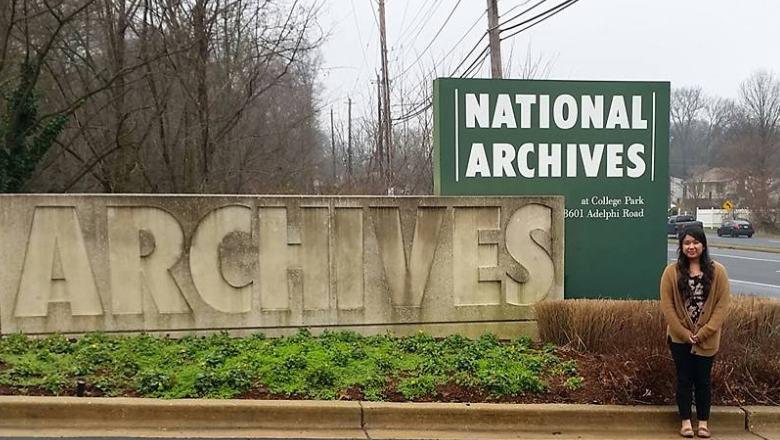
• student in front of archive signage
Center for Undergraduate Excellence

Undergraduate Scholarly/Creative Grants

»Undergraduate Scholarly/Creative Grants

Spring Grant Application Deadline 

Friday, April 3, 2026 at 4 PM

Applications Open Monday, March 2, 2026
Link to Apply


As a part of its commitment to scholarly, creative, and interdisciplinary work by students at Chapman University, the Center for Undergraduate Excellence invites proposals to the Undergraduate Scholarly/Creative Grant program.

Awards are intended to provide support for various faculty-mentored scholarly or creative projects conducted by students. Grants typically do not exceed $1000, but all reasonable proposals will be considered. Funds may be used for a number of purposes, including (but not limited to):
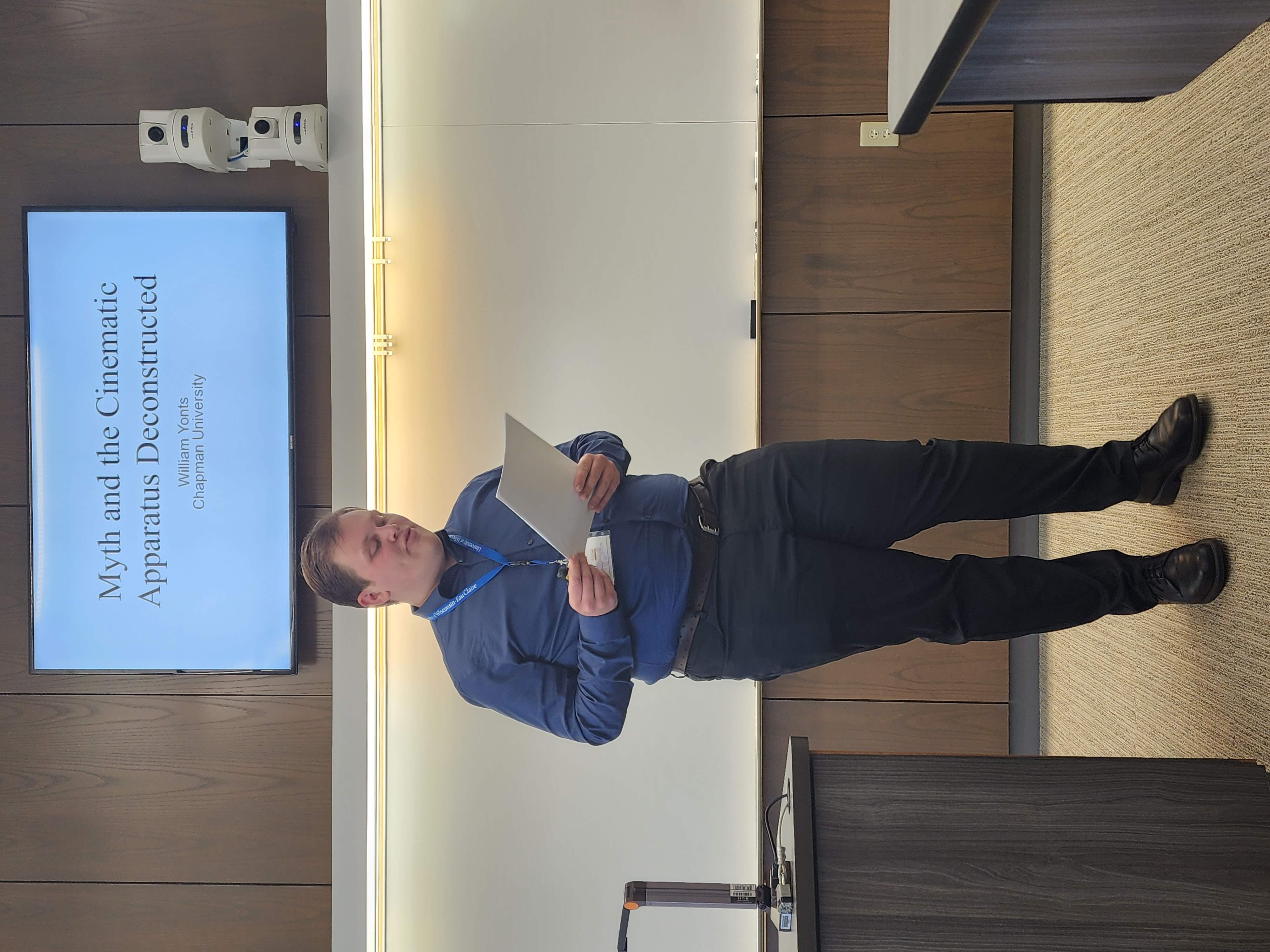
ncur presentation

  • The purchase of equipment, materials, or supplies directly related to the project.
  • Facility rental, copyright fees, and other costs associated with creative productions.
  • Non-material expenses directly related to the project, such as test subject remuneration, license fees, or external lab analyses.
  • Travel expenses required to conduct the creative activity or scholarly research, such as working in an archive or collecting field data. If you're presenting research, see Travel Grants.
  • Undergraduate Scholarly/Creative Grants are not to be used for salary or stipend.

Questions about this program can be sent to cue@chapman.edu. 
 

researchstudent art


Toggle Section

Past Participants

How to Write a Successful Grant Application

This information session is designed to help students learn about the requirements, how to apply, and address your questions before the Undergraduate Scholarly/Creative Grant application deadline.

View the following PowerPoint for information on writing your grant proposal. 

Writing Grant Proposals

Writing Grant Proposals for Creative Work

Please feel free to email cue@chapman.edu with any questions. 

Eligibility

  • Chapman University undergraduate matriculated students in good standing are eligible to apply for a Scholarly/Creative Grant. 
  • Students graduating in the same semester for which they are applying are not eligible for scholarly/creative grants (e.g., students graduating in spring are not eligible for spring grants; students graduating in fall are not eligible for fall grants). Seniors graduating in the summer are eligible to apply for spring grants but must be enrolled in a Chapman summer course. Approved funds must be spent within the summer term.
  • Applicants can be from any discipline and can work on a project outside their major.
  • No prior research experience is required, but the applicant must have a full-time faculty mentor.
  • All grant recipients are required to present at the Student Scholar Symposium within the same academic year the grant funds are utilized.
  • Students may only receive one grant award each academic year, either in the fall or spring. 
  • Unsuccessful proposals may be revised and resubmitted in future calls for proposals.

Requirements and Selection Criteria

  • Description of Project (2 pages maximum) 
    • Describe the project and provide background, context, and significance for a general audience. Students should use language accessible to reviewers outside the field to explain how the project demonstrates intellectual merit, advances the discipline, and is thoroughly planned.
    • Proposal details:
      • Proposals must present a project to be completed during the funding period that is original, feasible, and intellectually rigorous.
      • The project must clearly articulate its intellectual merit, including reflection on the research or creative questions it addresses and its broader significance.
      • Proposals should include a detailed project description, goals, methodology or creative approach, expected outcomes, and a timeline.
      • Applicants must demonstrate how the project extends beyond normal coursework, rehearsals, or studio practice, highlighting deeper inquiry or innovation.
      • Projects may be interdisciplinary and integrate humanities or creative arts with other fields.
      • If fieldwork is required for the project, proposals should thoroughly discuss the feasibility and planning of travel and logistics.
      • We strongly encourage a plan for dissemination or presentation of the project results in the proposal.
    • Document formatting guidelines:
      • Proposals must be written in 12-point font with 1-inch margins.
      • Document must be uploaded as a PDF
      • Proposal is limited to two (2) pages
      • References do not count toward the page limit and can be completed on a separate page.
      • Any pages beyond these limits will be removed before the proposal is sent to reviewers.
  • Letter of Support provided by the Faculty Mentor
    • One letter written by the faculty mentor should speak to the nature of the proposed research or creative activity, including the roles both the fellow and the mentor will play in the collaboration. While the faculty member is encouraged to provide evidence of the applicant’s ability, the letter is not explicitly or solely a letter of recommendation for the student per se. A faculty mentor might consider giving context for the proposed project, including its potential value in the field, as well as speaking to the student’s preparation and the ways that the faculty mentor will guide or oversee the student’s work. (The letter is submitted separately by a faculty mentor.)
  • Budget 
    • The budget worksheet should clearly state the expenses requested for funding. Cost should include taxes, and shipping is applicable. 
    • If your funding request is part of a larger budget that far exceeds the maximum grant funding, only submit a budget that reflects specific resources within the maximum funding limitations. DO NOT submit the larger budget. 
    • Funding for travel is contingent on Chapman University COVID policy or restrictions.
  • IRB (funded grants)
    • Additionally, your project may require additional approvals if it involves any hazardous materials or IRB approval if it involves any human or animal subjects; students are responsible for working with the faculty mentor to ensure that the project has approvals necessary to begin research and for submitting verification of authorization to the Center for Undergraduate Excellence. If your grant is funded and needs hazardous materials approval or IRB approval, any grant award is pending until the hazardous materials approval or IRB approval has been submitted to CUE prior to conducting research. www.chapman.edu/irb.
  • Selection is based on the following criteria: 
    • Intellectual Merit of the Project
    • Originality, Innovation, and Significance of the Project
    • Feasibility and Planning of the Project
    • Link to Rubric

Deadlines

  • The Center for Undergraduate Excellence will start accepting applications approximately 30 days prior to the published deadlines.

  • For Students
    • Spring 26 application deadline: Friday, April 3, 2026 at 4 PM

  • For Faculty
    • Spring 2026 Letter of Support deadline: Tuesday, April 7, 2026 at 12:00 PM (noon)
    • Faculty will receive the online portal link in an email once an application has been received.

Funding Period

  • Awarded funds will be available within the following funding periods. 
    • Grants awarded in Spring '26 (Summer/Fall funding period) - June 1, 2026 - November 15, 2026.
  • Graduating Seniors funding period:
    • Seniors graduating in Summer ’26 must be enrolled in a summer course, and the funding period is limited to June 1 - August 22, 2026, or the last day of your enrolled summer course, whichever comes first.

Report on Use

All grant recipients must complete a Report on Use form to detail how funds were used. The Report on Use Form must be signed by the recipient and their faculty sponsor.

All Report on Use forms are due immediately after the close of the funding period, no later than:

  • Grants awarded Fall '25: May 1, 2026
  • Grants awarded Spring '26: December 1, 2027
    • Graduating seniors in Summer '26: August '26