Technological advancements and evolving healthcare needs have changed the pharmaceutical industry. Now more than ever, leaders must foster innovation in delivering personalized care and improving the quality, efficacy and safety of drugs.
Chapman University School of Pharmacy (CUSP) prepares students to tackle these challenges and beyond in our rigorous, comprehensive Doctor of Pharmacy (Pharm.D.) degree program.
Chapman Pharm.D. By the Numbers
- 6:1 - Student-Faculty Ratio
- 900+ - Rotation Sites From San Diego to Northern California
- 93.7% - NAPLEX First-Time Pass Rate (View more key outcomes)
Why Earn Your Doctor of Pharmacy Degree at Chapman?
- With a high standard of excellence, CUSP is one of the best pharmacy schools in the nation.
- Located in beautiful Irvine, California, the School of Pharmacy offers students the unique ability to network with nearby biomedical, biotech and pharmaceutical companies.
- Innovative research experiences allow our students to become leaders in their field and prepare for advanced career opportunities.
- Students apply the skills they learned in the classroom to real-world contexts during their clinical rotations in a variety of healthcare settings.
- Applicants can apply to the Pharm.D. program without submitting their PCAT scores.
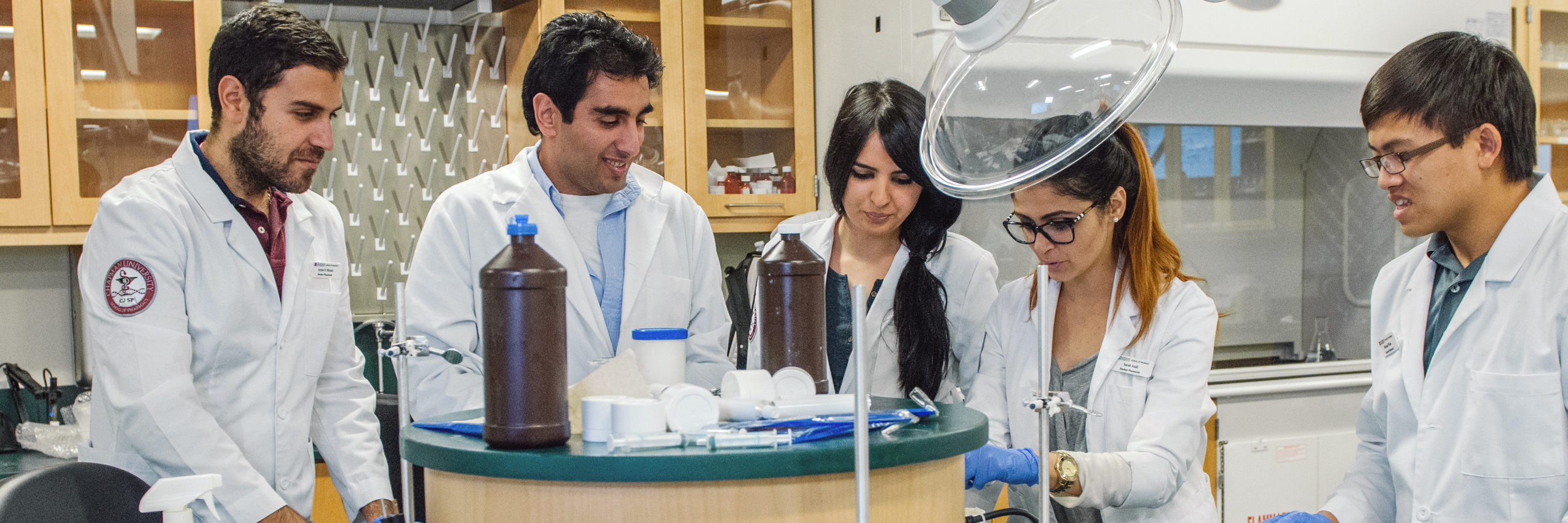
- Integrated professional learning means students work with other health professionals, such as physician assistants, nurses, physical therapists and speech pathologists. This ensures they gain insight into all aspects of a patient’s health, enabling them to deliver more comprehensive care.
What to Expect
Years One and Two
During the first two professional years, introductory experiential courses expose students to various pharmacy practice settings, practitioners and community health needs. These, coupled with the other courses in the curriculum, adequately prepare them for advanced pharmacy practice in year three.
Students can also apply to be part of the Leadership Emphasis Program (LDE) in their first year, which supplements their Doctor of Pharmacy degree through the development of personal and professional skill sets that position them for outstanding, lifelong leadership in healthcare.To learn more about LDE, visit the course catalog, or view some of their recent newsletters:
Class of 2026, fall 2025 newsletter
Class of 2026, spring 2026 events newsletter
Year Three
In the third year, students complete advanced experiential courses, which consist of six 6-week rotations. Required areas of practice include community, health system, ambulatory care and acute care practices. Students may also complete elective areas of practice such as managed care, administration, pharmaceutical industry, etc.
During this time, students can apply their knowledge and skills in direct patient care environments in the experiential courses, comprising nearly one-third of the entire curriculum. The goal of these courses is to hone the abilities that empower competent and caring healthcare delivery.