- Follow
»Office of Experiential Education
Where Your Career Experience Begins
Real-world experience is at the heart of Chapman University’s Doctor of Pharmacy (Pharm.D.) program. Our Office of Experiential Education (OEE) coordinates your clinical and practice-based rotations, ensuring you get the hands-on training and support you need to thrive.
Strong Partnerships Across California
Chapman University School of Pharmacy (CUSP) maintains a network of hundreds of rotation sites stretching from San Diego to Northern California. Many are in Orange County and the greater Los Angeles region, providing convenient access to settings such as community pharmacies, ambulatory and primary care clinics and hospitals.
The OEE team considers every student’s individual needs when assigning placements, ensuring that practicums fulfill personal and professional goals, not just program requirements.
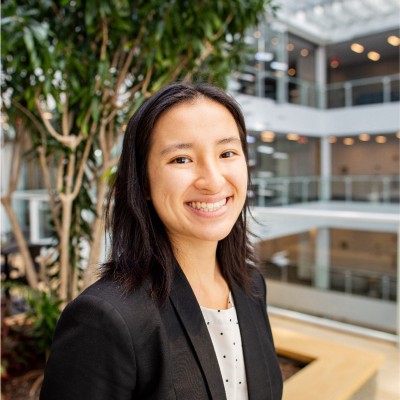
Get an Inside View
“All of the rotations give valuable insight into teamwork and communication, be it with patients, pharmacists or other professionals in the healthcare field.”
— Megan Shieh, Pharm.D. ‘24
Your Pharm.D. curriculum combines classwork with on-site rotations starting in your first trimester. We connect rotations directly to coursework, reinforcing concepts as you put them to work — getting a deeper understanding of endocrinology, for example, while working with diabetic patients.
During your first two years, you participate in Introductory Pharmacy Practice Experiences
(IPPEs). These courses provide hands-on practice in community and hospital pharmacy
settings. In your third year, you complete six Advanced Pharmacy Practice Experiences
(APPEs), immersive six-week rotations that give you an inside look at all aspects
of the profession.
Years 1 and 2 IPPE
Administer flu vaccines at a local chain or independent pharmacy in your first year Immunization class. From there, you rotate through community and health-system pharmacy settings; eight hours a week over five weeks for each first-year rotation. In your second year, you rotate through a community pharmacy, a health-system pharmacy, and a non-traditional practice setting; eight hours a week for 10 weeks. Collectively, IPPEs expose students to real-world practices and prepare them for APPEs.
Year 3 APPE
Complete at least 1,440 hours of clinical activities over 36 weeks in your APPE rotations. Four required rotations cover acute care/medicine, hospital/health system, community and ambulatory care. Two elective rotations let you delve more deeply into areas (non-traditional) that excite you, from managed care and the pharmaceutical industry to specialties such as infectious disease, oncology and anticoagulation.
Review the Full Experiential Curriculum
Student Stories in Experiential Learning
You’ll put everything you learn in the classroom to the test in clinical rotations. Learn more about the impact these hands-on experiences have made on these students.
Power of IPPE Rotations
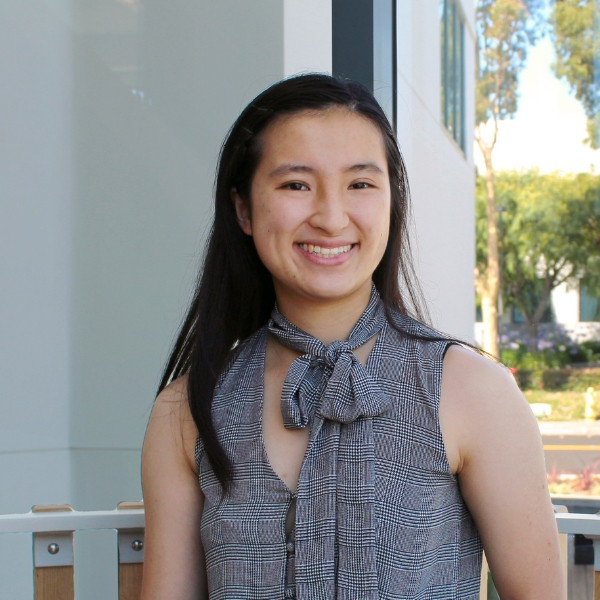
IPPE rotations didn’t just expose Megan Shieh, Pharm.D. ‘24, to a wide variety of real-world situations. They also gave her the confidence that she could succeed in a healthcare career.
She credits her preceptors with providing the support she needed to thrive. “Although they have all had different approaches, all of my preceptors were eager to teach; my experience would not have been as enriching had it not been for their support.”
Deep Dives at APPE Rotations
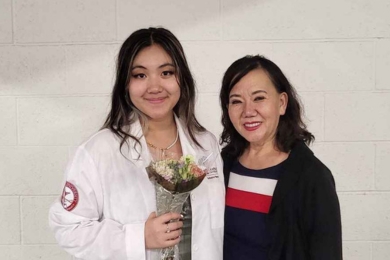 APPEs immerse you in all aspects of patient care, from acute care to discharge planning.
Jacqueline Nguyen, Pharm.D.’25, says her experience at Orange County’s Hoag Hospital
offered perspectives on both inpatient and outpatient care that brought lessons to
life.
APPEs immerse you in all aspects of patient care, from acute care to discharge planning.
Jacqueline Nguyen, Pharm.D.’25, says her experience at Orange County’s Hoag Hospital
offered perspectives on both inpatient and outpatient care that brought lessons to
life.
“Seeing cases unfold in real time helped me connect lecture material to real-life situations. You don’t have to know everything right away — but you do need to be curious and follow through.”
Pharmacy Preceptor Resources
Preceptors are the key to any successful rotation. That’s why we provide the support, opportunities and resources that make it as easy as possible for you to focus on the students in your care.
Each CUSP preceptor is granted full access to the online resources, databases, research and publications available at our Leatherby Libraries. You’ll also enjoy networking opportunities with Chapman faculty, alumni and other members of our community.
Become a CUSP Preceptor
As a preceptor, you’ll spend weeks supervising and mentoring each Pharm.D. student, but your impact will last far longer.
Your work doesn’t just make a difference to future pharmacists and the patients they serve. Your passion also elevates the profession itself by setting an example for others to follow.
CUSP is always seeking new preceptors. If you’re committed to lifelong learning, collaborating with others and helping students become practice-ready, compassionate pharmacists, we’re eager to meet you and tell you more about what it means to serve as a preceptor.
Learn More About Chapman University School of Pharmacy
Great clinical experiences produce great pharmacists. Chapman’s Office of Experiential Education provides students and preceptors with the resources they need to make those experiences count. Contact us to learn more about Chapman’s Pharm.D. program.
Preceptor Development Program
Interested in having a Preceptor Development Program at your site? Use our online inquiry form.