»Meet our Beckman Scholars
Learn About Our Beckman Scholars and Their Research

Grace Cho '27
Title: Molecular Dynamics Simulations to Characterize Atrazine Interaction with cAMP-specific Isoforms of Phosphodiesterase-4
Abstract:Non-typhoidal Salmonella enterica, a Gram-negative bacterium, is the leading cause of bacterial foodborne illnesses in the United States, with approximately 1.35 million reported cases annually. Salmonella forms biofilms on solid surfaces, increasing the chances of foodborne contamination in food processing facilities. The Contamination Sanitization Inspection-Disinfection (CSI-D) device is a portable, fluorescence-based imaging system that can detect microbial contamination and disinfect surfaces using ultraviolet-C (UV-C) light. Though the CSI-D device is a convenient tool with high potential and successful results from previous studies, there is a lack of research investigating the efficacy of the device in inactivating biofilms attached to common food contact surfaces. The objective of this research is to examine the effects of UV-C irradiation on Salmonella biofilms on food-contact surfaces. The project will require preparation of acid-adapted strains to mimic the characteristics of foodborne pathogens, with procedures adapted from previous studies. Biofilm will be grown, and the bacterial culture will be added to three different food contact surfaces, followed by CSI-D treatment using three different exposure times (15 s, 30 s, 45 s) and intensities (5, 10, and 15mW/cm2). The cell count will be determined from growth observed on selective agar media, followed by statistical analysis. We hypothesize that the combination of the highest intensity with the longest exposure time will result in the greatest reduction in biofilm growth.

Ocean Trang '27
Title: Inactivation of Salmonella biofilms on Food Contact Surfaces using the Contamination Sanitization Inspection-Disinfection (CSI-D) System
Abstract: Atrazine is one of the most widely used herbicides globally. However, its broader effects on human health are poorly understood. Prior research has implicated atrazine as an endocrine disruptor capable of elevating intracellular cyclic adenosine monophosphate (cAMP) levels in rat pituitary and leydig cells. With experimental evidence pointing to phosphodiesterase-4 (PDE4) as the likely target. However, whether atrazine acts through direct competitive binding at the PDE4 catalytic site or through an allosteric mechanism is not fully understood. This study uses molecular docking and molecular dynamics (MD) simulations to characterize atrazine's interactions with eight common PDE4 isoforms expressed in pituitary and leydig cells. Atrazine binding to each isoform will be compared to known PDE4 inhibitors through 400 ns MD simulations in GROMACS. The central hypothesis is that atrazine inhibits PDE4 through a noncompetitive, allosteric mechanism rather than direct catalytic site occupancy. This study aims to clarify the basis of atrazine's endocrine-disrupting activity and advance our understanding of the broader effects of herbicides.
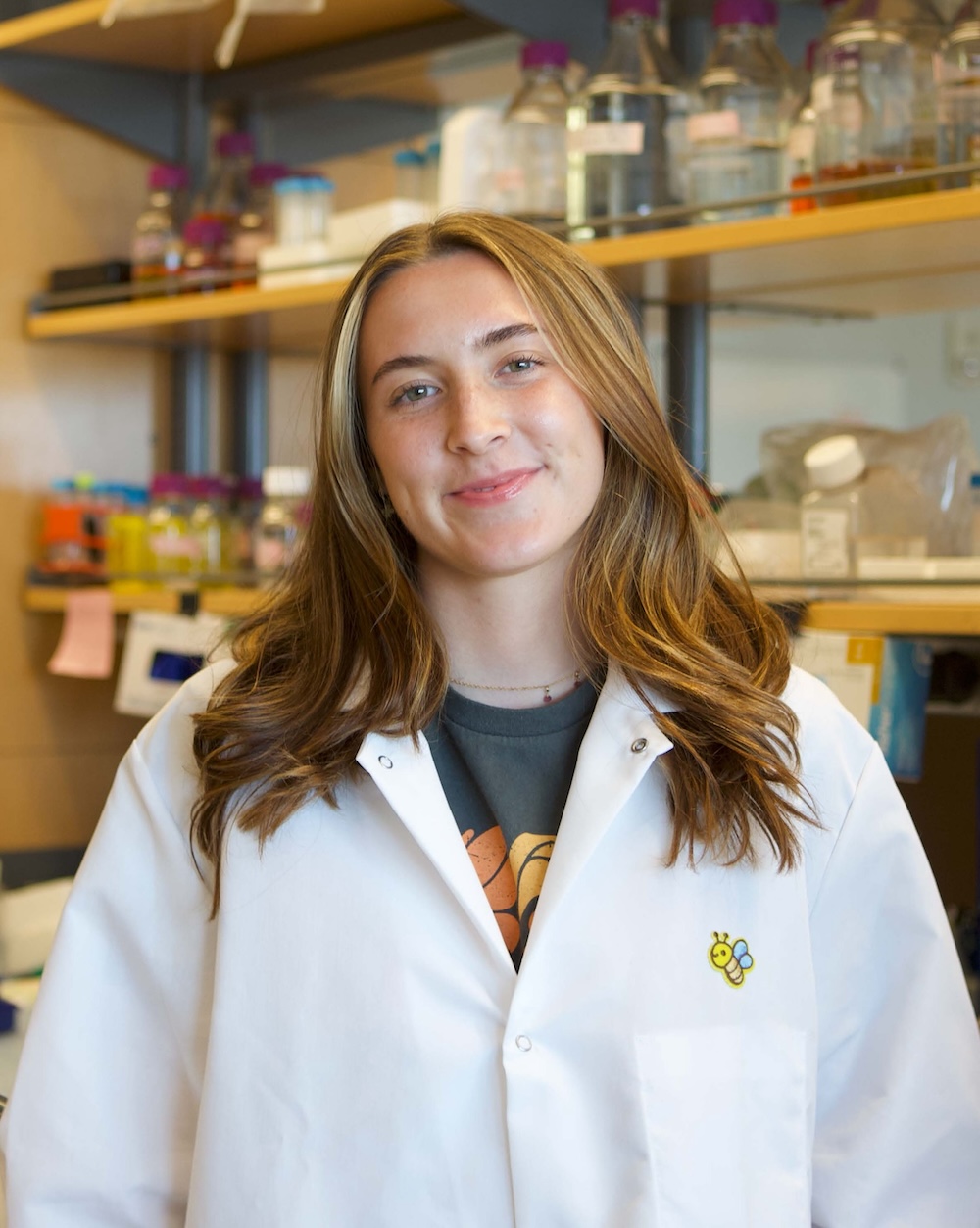
Molly Niswender '26
Project description: Niswender is working with Assistant Professor Cecilia Zurita Lopez to characterize PRMT7 Substrate Methylation in Triple Negative Breast Cancer Metastasis. Triple-negative breast cancer is an aggressive subtype with limited treatment options and poor prognosis, particularly when metastasis occurs. Protein arginine methyltransferase 7 (PRMT7) has been found to be overexpressed in metastatic breast cancer, while tumor suppressor p53 is often functionally impaired in these cases. Niswender is investigating the potential role of PRMT7 in directly methylating p53 at specific arginine residues, thereby altering its transcriptional activity and promoting cancer progression. Using a combination of in vitro methylation assays, mass spectrometry, and transcriptional analysis via qPCR, Niswender aims to determine whether PRMT7-mediated monomethylation impacts p53’s regulation of downstream targets such as p21. The work could reveal a novel mechanism of triple-negative breast cancer metastasis and identify PRMT7 as a viable therapeutic target.
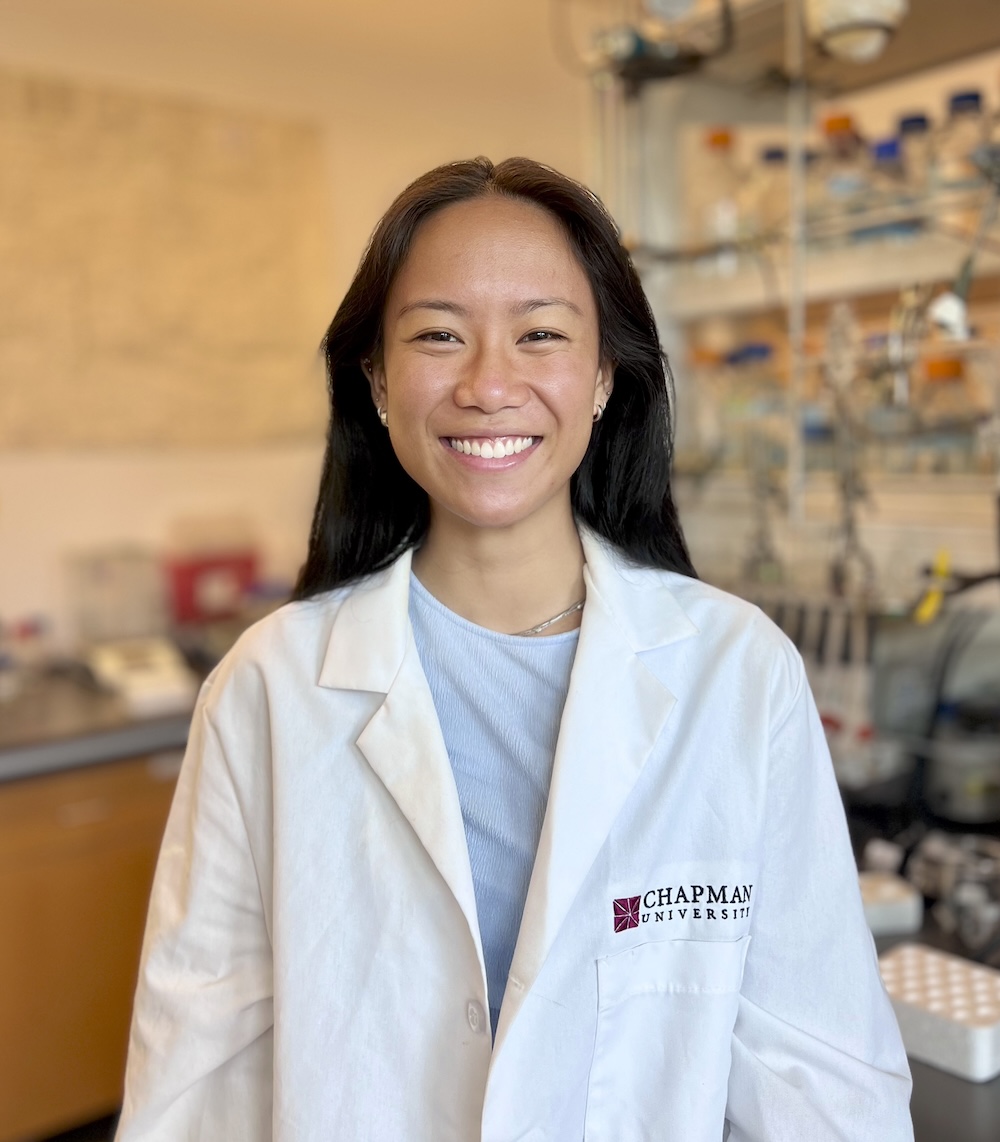
Katie Sanders '26
Project description:Sanders is working with Associate Professor Cedric Owens to investigate temperature dependence of Nitrogenase and CowN’s low temperature protective properties. Nitrogenase is an important enzyme in nature since it is the only enzyme to catalyze the reduction of nitrogen gas into the plant nutrient ammonia. There are three isoforms of the enzyme containing, respectively, a molybdenum-iron sulfur, vanadium-iron-sulfur or iron-sulfur cofactor in the active site. The temperature dependence of the three isoforms differs, with molybdenum nitrogenase being the most sensitive to low temperatures. Sanders is investigating the reason why the vanadium and molybdenum isoforms of nitrogenase have different temperature dependencies. She’s also exploring whether nitrogen fixing bacteria have chaperone proteins that enhance nitrogenase activity at low temperature. This work will help elucidate how different nitrogenase isoforms are used by bacteria in different climatic environments.

Lea-Sophie Vetter '26
Project description: Vetter is working with Professor of Biological Sciences Chris Kim in assessing arsenic bioaccessibility in mine wastes. Prevalent in the earth’s crust, arsenic harms the environment and humans exposed to it. Inhalation or ingestion are common routes of exposure — especially for people living near abandoned mine sites. Vetter's aim is to determine the effectiveness of arsenic spatial distribution as an indicator of the changes in arsenic's bioaccessibility in mine wastes over time, using simulated gastric fluid extraction and scanning electron microscopy with energy dispersive X-ray spectroscopy. Her findings will likely offer a novel approach to long-term risk assessments of these mine sites.

Chloe Castanon '25
Project description:Castanon is working with Associate Professor of Food Science Rosalee Hellberg, investigating authentication of grass-finished beef. Consumer demand for grass-finished beef is driven by concerns regarding quality, nutrient density, and environmental sustainability. Castanon investigates such concerns relating to four different finishing diets. Using gene expression profiling, Castanon is linking gene expression data to nutrient density data, hypothesizing that genes regulating the synthesis of long-chain n-3 fatty acids, polyphenols, and vitamin E will exhibit differential expression based on supplemental feeds used in grass-finished beef production.

Kevin Nguyen '24
Nguyen researched drought tolerance in chia by zeroing in on these plants at the genomic level. In addition to being a Beckman Scholar, Nguyen was also a Simon STEM Scholar and Goldwater Scholar.

Paul Rosa '24
Benjamin Janda '23

Ishaan Shah '23