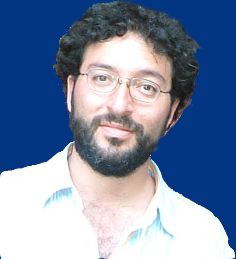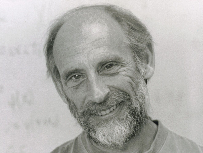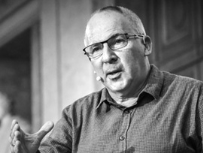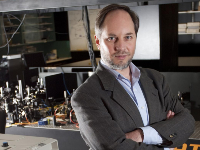

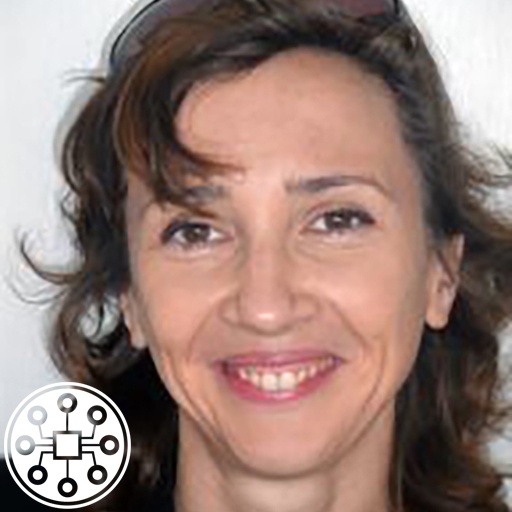
Dr. Alexia Auffèves did her Ph.D. in the group of S. Haroche, where she fabricated Schrödinger cat states of light.She was hired at CNRS in 2005 to realize quantum optics experiments with semiconducting quantum dots. She then took a theoretical turn. Dr. Auffèves is expert in quantum thermodynamics, quantum information and quantum foundations, and works in close connection with experimentalists and theorists worldwide.
She heads Quantum Engineering Grenoble since 2017.
Mark Bashkansky, Ph.D.
Dr. Bashkansky is employed as a civilian scientist in the Naval Research Laboratory for the Department of Defense. He is interested in basic and applied research in the fields of laser physics, quantum optics, nonlinear optics, and optical techniques for the nondestructive evaluation of materials.
Robert W. Boyd, Ph.D.
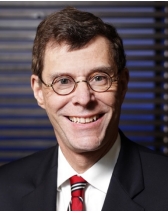 Robert W. Boyd was born in Buffalo, New York. He received the
B.S. degree in physics from MIT and the Ph.D. degree in physics
from the University of California at Berkeley. His Ph.D. thesis was
supervised by Charles Townes and involves the use of nonlinear
optical techniques in infrared detection for astronomy. He joined
the faculty of University of Rochester in 1977 and in 2010 became
Professor of Physics and Canada Excellence Research Chair in
Quantum Nonlinear Optics at the University of Ottawa. His
research involves studies of optical physics and nonlinear optics.
Professor Boyd has written two books, co-edited two anthologies,
published over 550 research papers (around 80,000 citations, Google index 129), and
been awarded ten patents. He is a member of the
Heidelberg Academy and the Royal Society of Canada.
Scott Chapman, Ph.D.
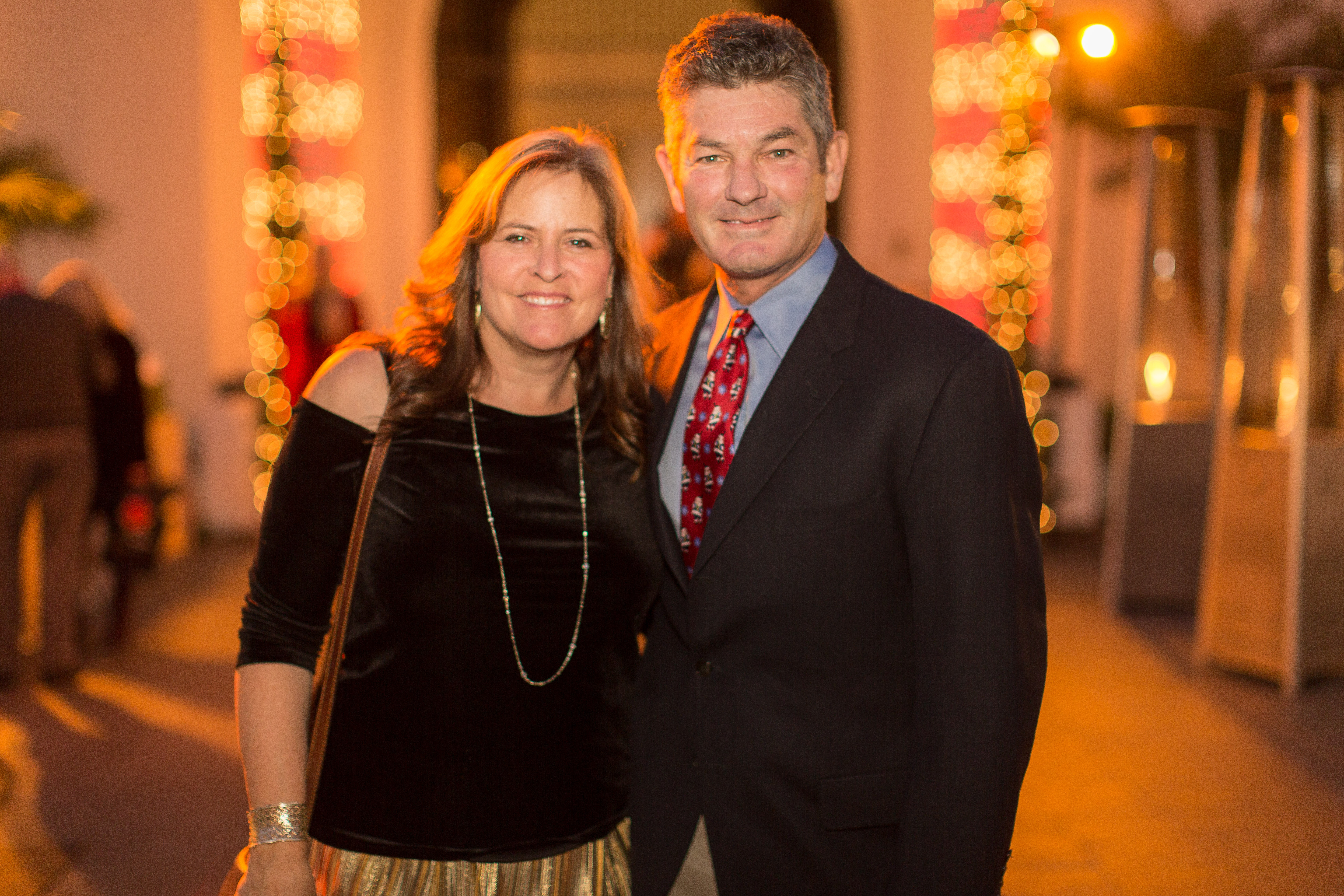
Scott Chapman is the son of Trustee C. Stanley Chapman and great-grandson of university namesake C.C. Chapman. An alumnus of McKinsey & Company, he co-founded Project Hosts, a successful computer business and consulting company which provides IT outsourcing.
Scott received his undergraduate degree from Yale in physics and then acquired a doctorate in physics from UC Berkeley. After graduation, he traveled Europe and later led talks at physics conferences around the world. Scott is a member of the Board of Trustees of Chapman University and serves as the chair of the Digital Resources Committee.
Eliahu Cohen, Ph.D.
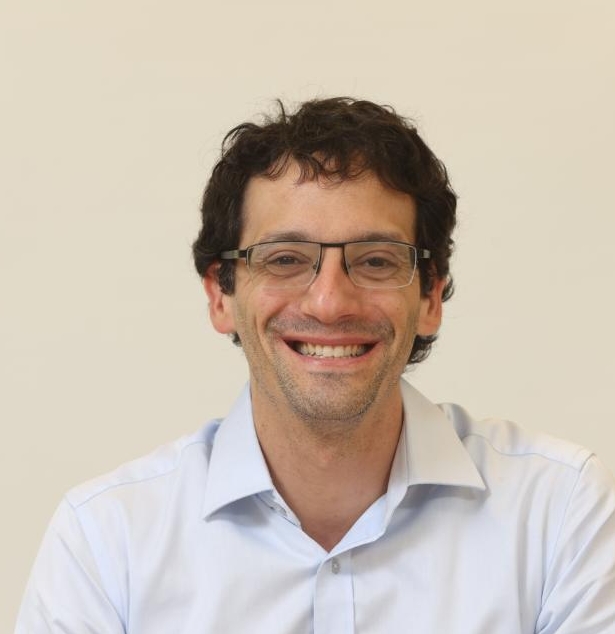 Dr. Eliahu Cohen is an Associate Professor at Bar-Ilan University and the Institute
of Nanotechnology and Advanced Materials. He is currently the head of the Quantum
Engineering track. Eli is a theoretical physicist fascinated by quantum foundations
and quantum information, but also intrigued by laboratory implementations (especially
optical ones) and quantum technology. His research group, established in 2018, is
called “From Quantum Foundations to Quantum Technologies” and indeed, he strives to
utilize a deeper understanding of fundamental questions in developing better quantum
computation, simulation, sensing and communication. He has developed, and extended
towards laboratory realization, various quantum measurement techniques, as well as
a framework for characterizing and quantifying quantum nonlocality known as Relativistic
Independence. In addition to the above, he is also highly interested in quantum time
and reference frames, quantum optics and electrodynamics, geometric and topological
effects.
Dr. Eliahu Cohen is an Associate Professor at Bar-Ilan University and the Institute
of Nanotechnology and Advanced Materials. He is currently the head of the Quantum
Engineering track. Eli is a theoretical physicist fascinated by quantum foundations
and quantum information, but also intrigued by laboratory implementations (especially
optical ones) and quantum technology. His research group, established in 2018, is
called “From Quantum Foundations to Quantum Technologies” and indeed, he strives to
utilize a deeper understanding of fundamental questions in developing better quantum
computation, simulation, sensing and communication. He has developed, and extended
towards laboratory realization, various quantum measurement techniques, as well as
a framework for characterizing and quantifying quantum nonlocality known as Relativistic
Independence. In addition to the above, he is also highly interested in quantum time
and reference frames, quantum optics and electrodynamics, geometric and topological
effects.
Fabrizio Colombo, Ph.D.
 Dr. Fabrizio Colombo is Associate Professor of Mathematical Analysis at Politecnico di Milano, Italy.
Paul Davies, Ph.D.
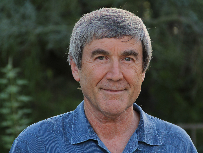
Dr. Paul Davies is the Director of The Beyond Center for Fundamental Concepts of Science at Arizona State
University. The Beyond Center is "devoted to confronting the really big questions of science and
philosophy." Dr. Davies is also Principal Investigator of ASU's Center for Convergence of Physical Science and Cancer
Biology, one of 12 Physical Sciences-Oncology Centers nationwide established by the National Institutes of Health's National Cancer Institute.
He has received many awards, including the 1995 Templeton Prize for his work on the deeper implications of science, the 2001 Kelvin Medal from the UK Institute of Physics, and the 2002 Michael Faraday
Prize from the Royal Society for promoting science to the public.
Dr. Davies has been a member of the Institute for Quantum Studies since 2011.
Brad Dodrill
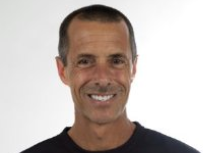
François Englert, Ph.D.
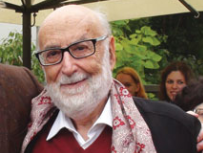
Dr. Englert shares the 2013 Nobel Prize in Physics with Peter Higgs, "for the theoretical discovery of a mechanism that contributes to our understanding of the origin of mass of subatomic particles, and which recently was confirmed through the discovery of the predicted fundamental particle, by the ATLAS and CMS experiments at CERN's Large Hadron Collider".
Dr. François Englert has been a member of the Institute for Quantum Studies since 2011.
Avshalom Elitzur, Ph.D.
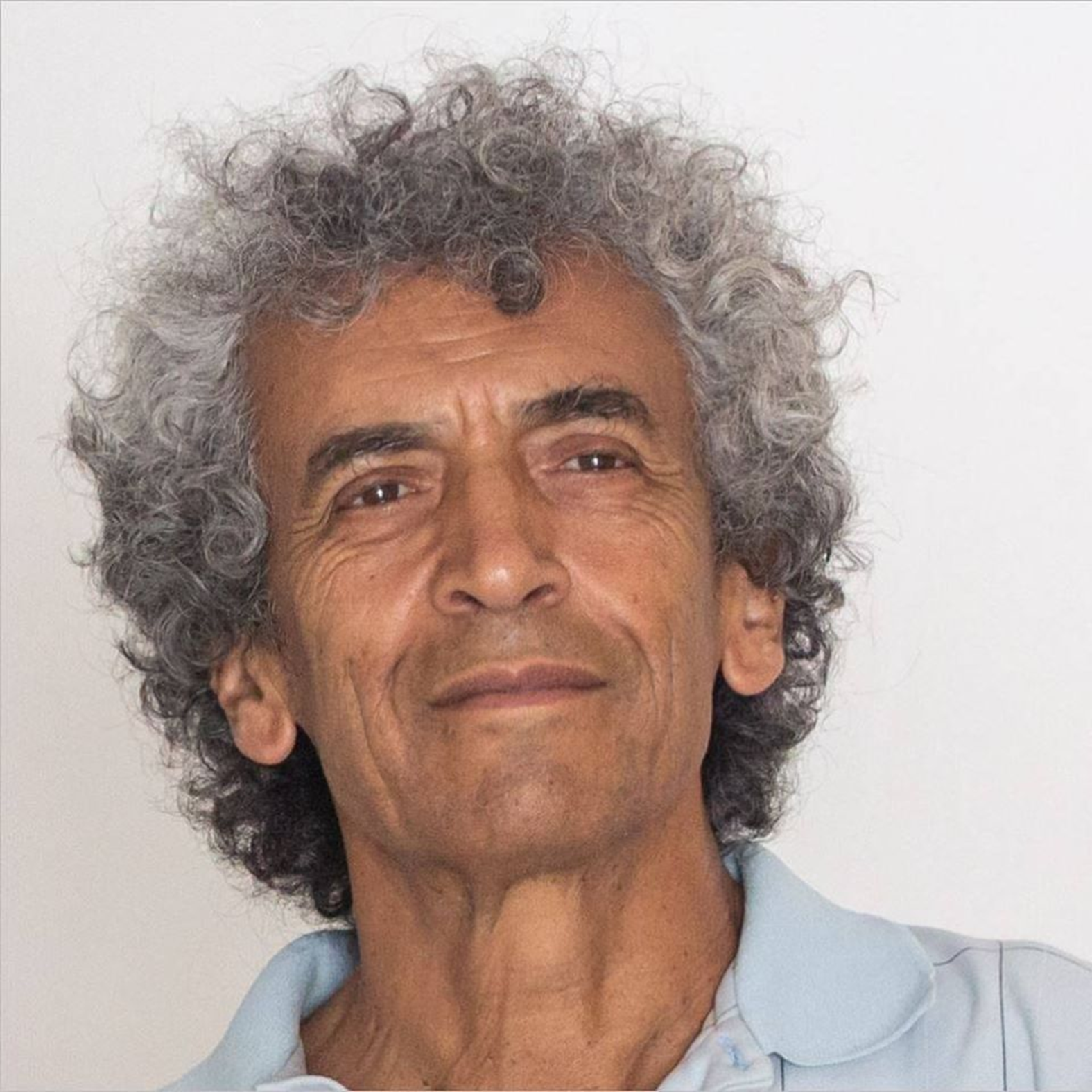 Avshalom Cyrus Elitzur was born in 1957 in Iran, from where his family emigrated to
Israel. He did his Ph.D. in Tel-Aviv University with Yakir Aharonov. Among his works
are the Elitzur-Vaidman bomb-testing experiment (with Lev Vaidman), quantum oblivion
(with Eliahu Cohen), the quantum liar paradox (with Aharonov, Smoli et al.), and the
disappearing and reappearing particle (with Aharonov et al.). His other published
papers deal with diverse issues in life and behavioral sciences, such as the thermodynamics
of living systems, suicide prevention and the mind-body problem. He is one of the
founding members of Iyar, the Israel Institute for Advanced Research in Lod, Israel.
Avshalom Cyrus Elitzur was born in 1957 in Iran, from where his family emigrated to
Israel. He did his Ph.D. in Tel-Aviv University with Yakir Aharonov. Among his works
are the Elitzur-Vaidman bomb-testing experiment (with Lev Vaidman), quantum oblivion
(with Eliahu Cohen), the quantum liar paradox (with Aharonov, Smoli et al.), and the
disappearing and reappearing particle (with Aharonov et al.). His other published
papers deal with diverse issues in life and behavioral sciences, such as the thermodynamics
of living systems, suicide prevention and the mind-body problem. He is one of the
founding members of Iyar, the Israel Institute for Advanced Research in Lod, Israel.

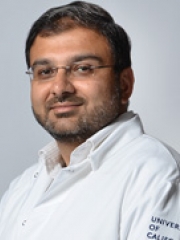 Irfan Siddiqi received his AB (1997) in chemistry & physics from Harvard University.
He then went on to receive a Ph.D. (2002) in applied physics from Yale University,
where he stayed as a postdoctoral researcher until 2005. Irfan joined the physics
department at the University of California, Berkeley in the summer of 2006. In 2006,
Irfan was awarded the George E. Valley, Jr. prize by the American Physical Society
for the development of the Josephson bifurcation amplifier. In 2007, he was awarded
the Office of Naval Research Young Investigator Award, the Hellman Family Faculty
Fund, and the UC Berkeley Chancellor’s Partnership Faculty Fund.
Irfan Siddiqi received his AB (1997) in chemistry & physics from Harvard University.
He then went on to receive a Ph.D. (2002) in applied physics from Yale University,
where he stayed as a postdoctoral researcher until 2005. Irfan joined the physics
department at the University of California, Berkeley in the summer of 2006. In 2006,
Irfan was awarded the George E. Valley, Jr. prize by the American Physical Society
for the development of the Josephson bifurcation amplifier. In 2007, he was awarded
the Office of Naval Research Young Investigator Award, the Hellman Family Faculty
Fund, and the UC Berkeley Chancellor’s Partnership Faculty Fund.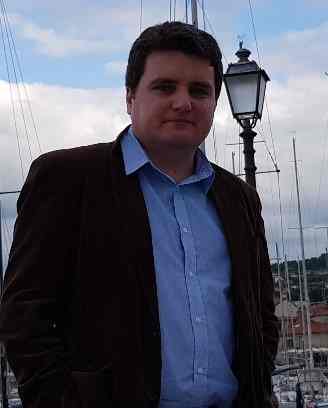 Gleb is a Ukrainian theoretical physicist, PhD in Theoretical Physics and senior researcher.
He is an expert in quantum mechanics and quantum measurement theory, and the author
of Universal Causal Separability/Entanglement Criterion, recognized among the most
significant results of NASU in 2021. He was the only Ukraine-affiliated participant
at the Conference on Quantum Measurement: 2019, ICTP, Trieste, a meeting of the leading
world experts in the field; he was also the first Ukrainian postdoc at the Dahlem
Center for Complex Quantum Systems at Free University of Berlin.
Gleb is a Ukrainian theoretical physicist, PhD in Theoretical Physics and senior researcher.
He is an expert in quantum mechanics and quantum measurement theory, and the author
of Universal Causal Separability/Entanglement Criterion, recognized among the most
significant results of NASU in 2021. He was the only Ukraine-affiliated participant
at the Conference on Quantum Measurement: 2019, ICTP, Trieste, a meeting of the leading
world experts in the field; he was also the first Ukrainian postdoc at the Dahlem
Center for Complex Quantum Systems at Free University of Berlin.