Emily Adlam, Ph.D.

Assistant Professor, Schmid College of Science and Technology; Physics. She works on the foundations of quantum mechanics and related issues in the philosophy of physics, studying issues ranging from the interpretation of quantum mechanics to broader philosophical topics like retrocausality and determinism. She received PhD in relativistic quantum information from the University of Cambridge. Prior to that she completed the Perimeter Scholar’s International programme in theoretical physics, and did her undergraduate degree in physics and philosophy at the Univeristy of Oxford. In 2018, she won a writing run competition by the Foundational Questions Institute (FQXi) for an essay entitled "What is Fundamental?"
Roman Buniy, Ph.D.
Associate Professor of Physics in Schmid College of Science and Technology.
Justin Dressel, Ph.D.
Program Director of Physics, Associate Professor of Physics in Schmid College of Science and Technology.
Nooshin M. Estakhri, Ph.D.
Dr. Estakhri’s research interests are in the areas of quantum optics, quantum information sciences, ultrafast optics, metamaterials and metasurfaces, and scattering phenomena. Specific areas of research include studying the complex interactions of the quantum state of light with random media and artificially engineered surfaces providing insights into potential applications in quantum metrology, tomography, microscopy, and circuit and network design. Other projects include investigating the absorption and scattering of singular nanoparticles and electromagnetic self-duality.
Armen Gulian, Ph.D.
 Dr. Armen Gulian is the Senior Research Scientist and Director of Chapman University's
Advanced Physics Laboratory, located at Daniele Struppa Research Park. His scientific
career began with a PhD and post-doctoral research on non-equilibrium phenomena in
superconductors and superfluids with Nobel Laureate Vitaly Ginzburg.
Dr. Armen Gulian is the Senior Research Scientist and Director of Chapman University's
Advanced Physics Laboratory, located at Daniele Struppa Research Park. His scientific
career began with a PhD and post-doctoral research on non-equilibrium phenomena in
superconductors and superfluids with Nobel Laureate Vitaly Ginzburg.
Before setting up Advanced Physics Laboratory for Chapman, Dr. Gulian founded the Laboratory of High-Temperature Superconductivity at the Physics
Research Institute, Armenia (overseeing the world's first observation of phase-slip centers in high-temperature
superconductors). Dr. Gulian has also worked on development of quantum detectors at
US Naval Research Laboratory, where he suggested a theoretical design and experimental
demonstration of cryogenic detector prototypes for X-ray/UV single-photons.
Read Dr. Gulian's Curriculum Vitae and review his list of many publications, including prediction of "photon deficit" effect (important for development of electronic coolers); theory of superconducting quantum generators (potential application for terahertz radiation imaging and high-resolution acoustic imaging); prediction of interference current at hydrodynamic description of superconductivity (important for superconducting nano-wires).
John Howell, Ph.D.
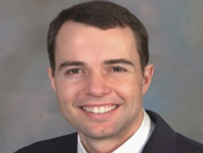
Professor of Physics in Schmid College of Science and Technology.
Professor Howell received his BS in Physics (1995) with a minor in Mathematics from Utah State University, and his MS and PhD in Physics (2000) from Pennsylvania State University. He then took a postdoctoral research position at the Centre for Quantum Computation at the University of Oxford. He is also involved with PiMICS (Light the Future), a collaborative project aiming to make advanced optical instrumentation accessible in resource-constrained settings. The initiative combines 3D printing and Raspberry Pi computing to build affordable, high-powered multispectral cameras and optical devices.
Ebrahim Karimi, Ph.D.
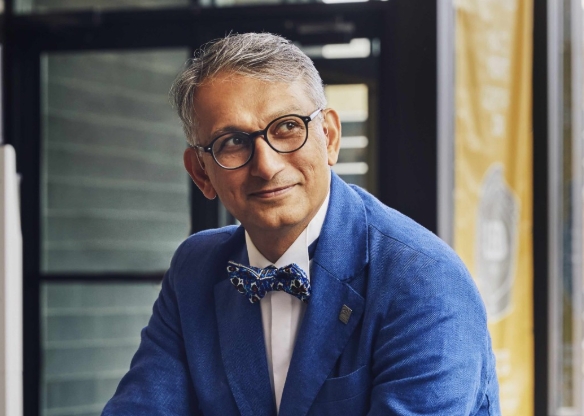 Professor Ebrahim Karimi is a Professor at Chapman University and Tier 1 Canada Research
Chair in Structured Waves and Quantum Communication at the University of Ottawa. He
has authored over 200 publications and holds 3 patents, exploring the quantum properties
of electrons and photons. He was the founder and co-director of the University of
Ottawa Quantum Institute (NexQT). He is a Fellow of Optica, the Global Young Academy,
the Royal Society of Canada, the National Research Council Canada, and the Max Planck
Institute for the Science of Light in Erlangen, Germany. He has been awarded the Ontario
Early Researcher Award, the University of Ottawa Early Career Researcher of the Year
Award, the Herzberg Medal from the Canadian Association of Physicists, the NSERC Arthur
B. McDonald Fellowship, and the Rutherford Memorial Medal from the Royal Society of
Canada.
Professor Ebrahim Karimi is a Professor at Chapman University and Tier 1 Canada Research
Chair in Structured Waves and Quantum Communication at the University of Ottawa. He
has authored over 200 publications and holds 3 patents, exploring the quantum properties
of electrons and photons. He was the founder and co-director of the University of
Ottawa Quantum Institute (NexQT). He is a Fellow of Optica, the Global Young Academy,
the Royal Society of Canada, the National Research Council Canada, and the Max Planck
Institute for the Science of Light in Erlangen, Germany. He has been awarded the Ontario
Early Researcher Award, the University of Ottawa Early Career Researcher of the Year
Award, the Herzberg Medal from the Canadian Association of Physicists, the NSERC Arthur
B. McDonald Fellowship, and the Rutherford Memorial Medal from the Royal Society of
Canada.
Prof. Ebrahim Karimi is a globally recognised physicist whose pioneering research bridges quantum optics, photonic technologies, and quantum information science. He is best known for advancing the science of structured quantum waves, optical angular momentum, and high-dimensional quantum systems. He has made foundational contributions to quantum photonics, real-time imaging of entangled photons, and secure quantum communication.
Jerry LaRue, Ph.D.

Jerry LaRue is an Assistant Professor of Chemistry and Biochemistry at Chapman University. He earned his Ph.D. in Physical Chemistry from the University of California, Santa Barbara in 2011, where he conducted research under Professor Alec Wodtke. His doctoral work focused on non-adiabatic effects at gas-surface interfaces. Dr. LaRue’s research interests lie at the intersection of physical chemistry and surface science, exploring the fundamental interactions that govern chemical dynamics.
Matt Leifer, Ph.D.
Assistant Professor of Physics in Schmid College of Science and Technology.
Kelvin McQueen, Ph.D.
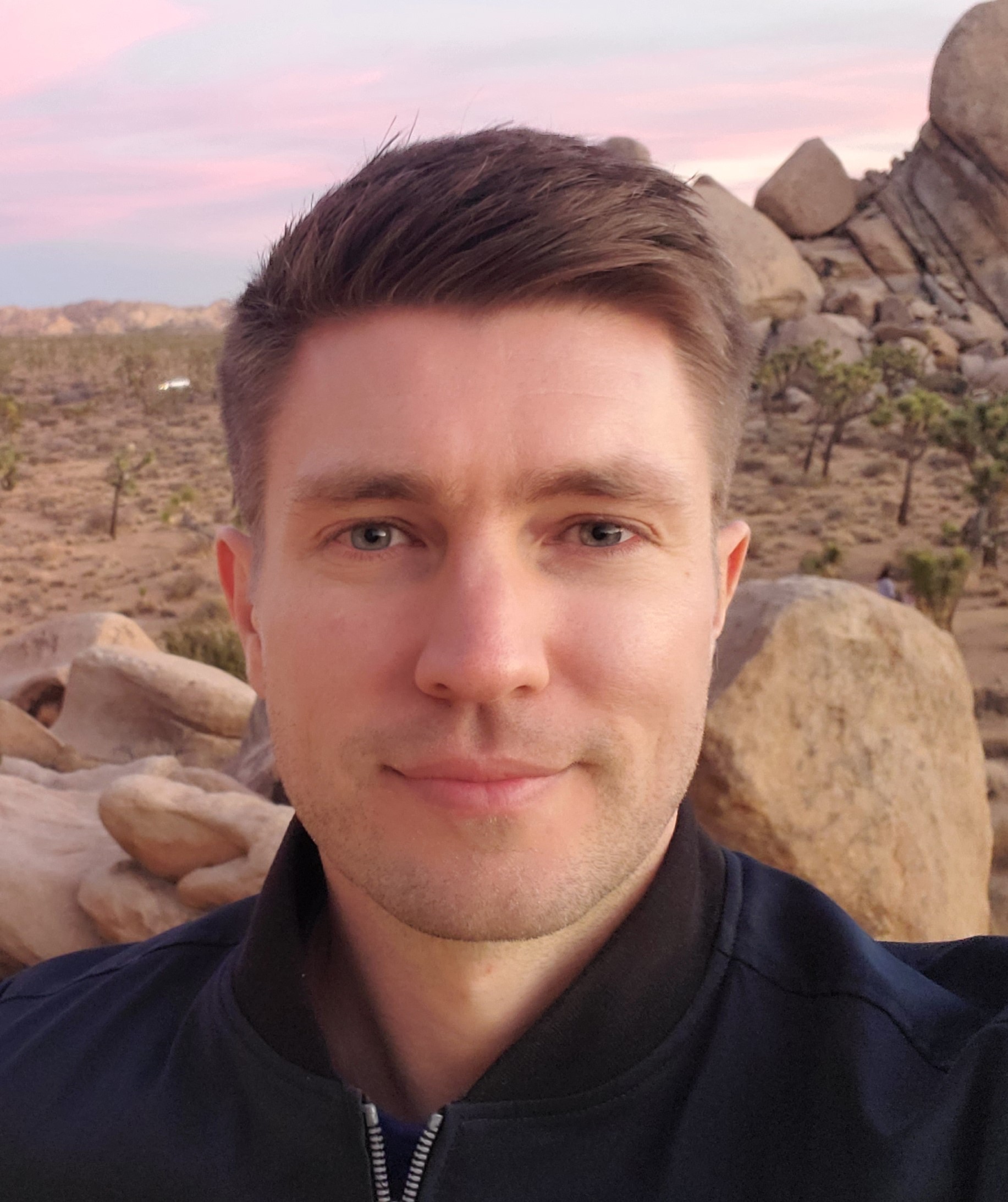 Kelvin McQueen is an Associate Professor of Philosophy in the Schmid College of Science
and Technology. His research focuses on foundational questions at the intersection
of physics, philosophy, and neuroscience, with particular interest in the physical
basis of consciousness and agency. He collaborates frequently with physicists and
neuroscientists in interdisciplinary work. His research in quantum physics addresses
the measurement problem, Bell’s theorem, and interpretations of quantum mechanics,
especially Everettian and collapse theories.
Kelvin McQueen is an Associate Professor of Philosophy in the Schmid College of Science
and Technology. His research focuses on foundational questions at the intersection
of physics, philosophy, and neuroscience, with particular interest in the physical
basis of consciousness and agency. He collaborates frequently with physicists and
neuroscientists in interdisciplinary work. His research in quantum physics addresses
the measurement problem, Bell’s theorem, and interpretations of quantum mechanics,
especially Everettian and collapse theories.
Ahmed Sabbar, Ph.D.
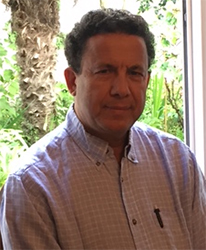 Professor in the department of mathematics, Schmid College of Science and Technology. The research interests of Dr.Sebbar center essentially around the geometric theory
of functions. This includes the complex analysis of planar domains and their links
to modular forms through uniformisation and to some aspects of Number theory. Another
research subject concerns Groups action on hyperbolic spaces in connection with Frobenius
determinant and representation theory.
Professor in the department of mathematics, Schmid College of Science and Technology. The research interests of Dr.Sebbar center essentially around the geometric theory
of functions. This includes the complex analysis of planar domains and their links
to modular forms through uniformisation and to some aspects of Number theory. Another
research subject concerns Groups action on hyperbolic spaces in connection with Frobenius
determinant and representation theory.Adrian Vajiac , Ph.D.
Associate Professor, Program Director for the Faculty of Mathematics
- Scholarly Works:
- Digital Commons
Mihaela Vajiac , Ph.D.
- Scholarly Works:
- Digital Commons