Our primary research goal is the discovery of superconducting materials under ambient
conditions.This direction was inspired by Academician Vitaly L. Ginzburg (Nobel Laureate, 2003),
under whose supervision Dr. Armen Gulian, Head of our Laboratory, was trained more
than 40 years ago.
In 1977, Ginzburg and colleagues published their renowned monograph predicting the
feasibility of high-temperature superconductivity, a visionary milestone in condensed
matter physics.
Although achieving superconductivity at room temperature is now seen as within reach,
the challenge remains formidable ,and the competition among leading research centers
worldwide is intense.
Thanks to comprehensive ONR support, our laboratory has been an active participant
in this global scientific effort , often referred to as the “Holy Grail” of modern
physics.
Because the mechanism of high-temperature superconductivity remains elusive, we have
pursued an empirical (Edisonian) approach, synthesizing and characterizing roughly
one thousand samples.
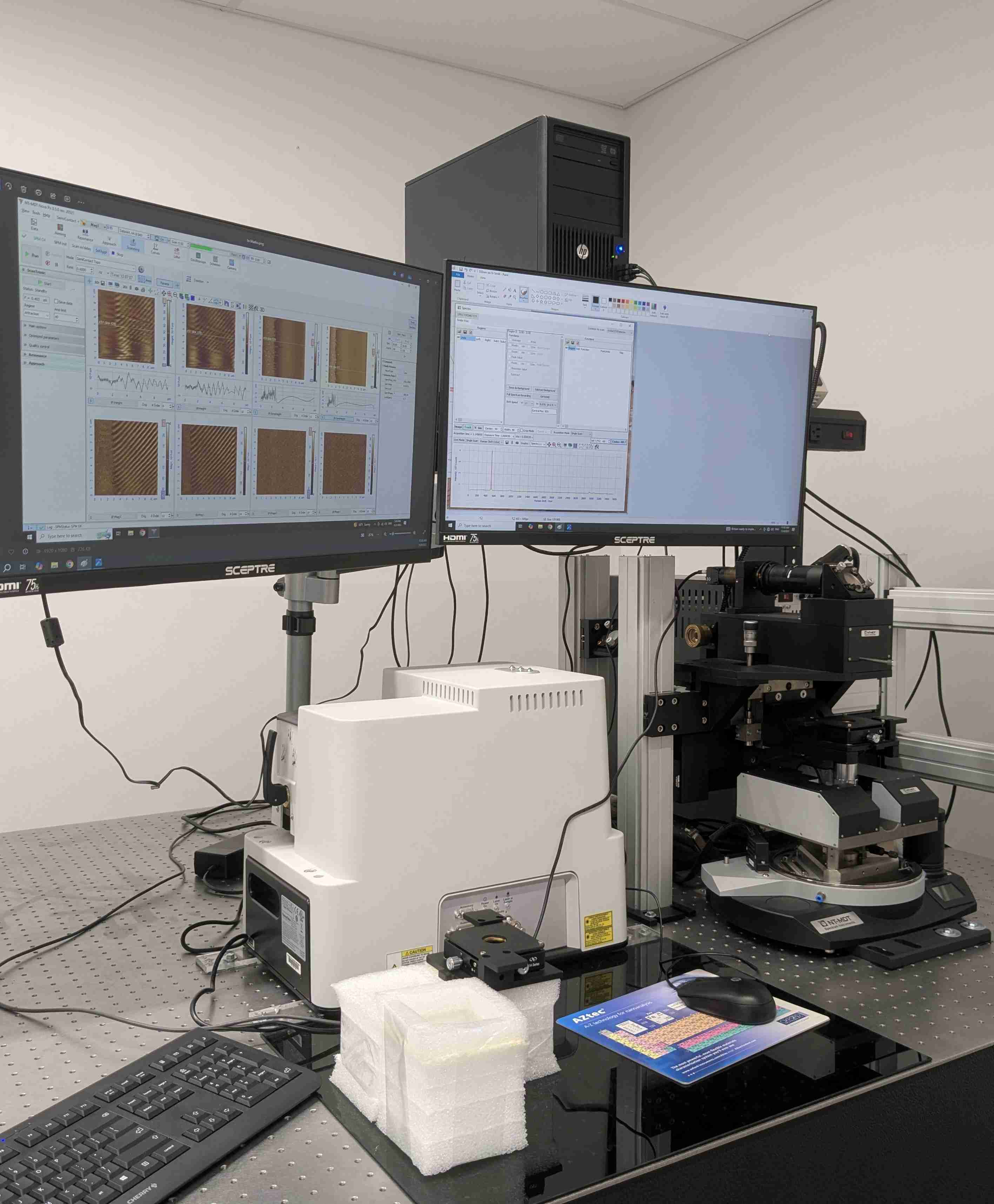
NTEGRA Spectra
Our NTEGRA Spectra (from NT-MDT) is a sophisticated integrated microscope combining atomic force microscopy
(AFM) with confocal Raman spectroscopy and optionally tip-enhanced Raman scattering
(TERS). It allows simultaneous acquisition of topographical /mechanical /electrical
(via AFM) and chemical /spectroscopic (via Raman) information at the same sample location. For TERS (Tip-Enhanced Raman Spectroscopy): using a metal-coated AFM tip you can
enhance the Raman scattering locally and break the diffraction limit of the optical
microscope with the lateral resolution < 15 nm in favorable cases. If you need to
characterize a sample where topography/structure (from AFM) and chemical composition (from Raman) vary at the nanoscale and need to be correlated
(for example: nanomaterials, heterostructures, interfaces, nano-bio hybrids), the
NTEGRA Spectra system is an excellent tool. Applications (require expertise): Using this device, we were able to achieve, among other results, the enhanced surface
functionalization of substrate-transferred graphene for electronic applications [https://pubs.acs.org/doi/abs/10.1021/acsanm.3c00783].
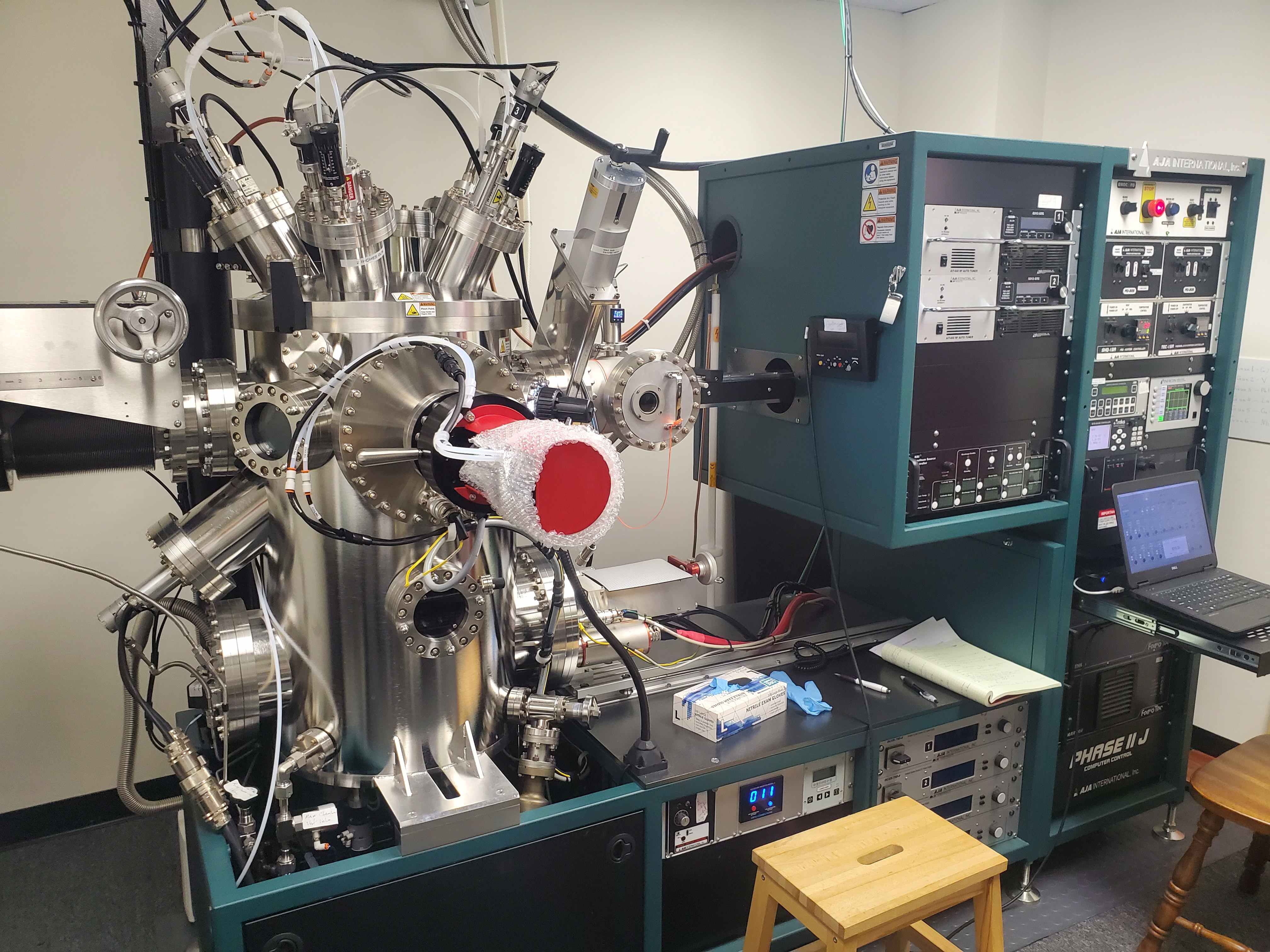
AJA International, Inc. flagship hybrid PVD platform
Our AJA International, Inc. flagship hybrid PVD platform is a modular UHV deposition system that is configured to combine AC/DC magnetron
sputter sources, Kaufman-style ion-assist source, multi-pocket electron-beam evaporator,
thermal evaporation furnaces and effusion cell — all in the same multi-port chamber
with load-lock, substrate heating and rotation and QCM rate control. System is equipped
by an UHV base pressure cryopump for achieving ~10⁻⁸ Torr regime, in-vacuum source
tilt/adjustment, gas injection to source heads for reactive sputtering, and full computer
control for recipe-based deposition. Its 34" diameter main chamber has an added load-dock for rapid sample exchange; rotating
and tilting substrates/planetary holders available for uniform coatings. Applications: Complex multilayer metals/oxides, magnetic thin films, dielectric/optical coatings,
refractory metals via e-beam, molecular/organics via K-cells, research on superconducting
films and quantum materials. This instrument is our frontline tool advancing both fundamental studies and device
fabrication.
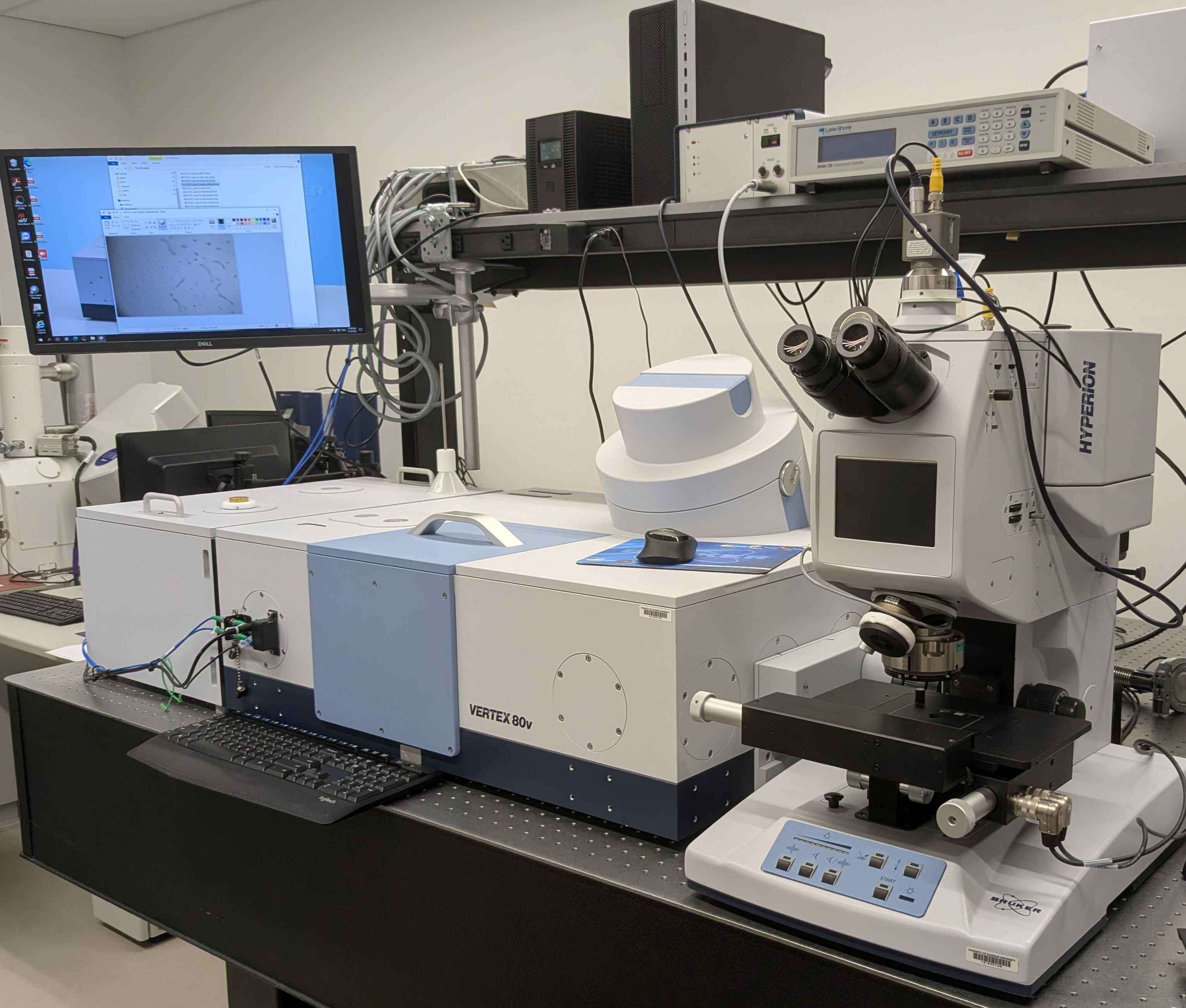
Bruker VERTEX 80v FT-IR
Bruker VERTEX 80v FT-IR spectrometer together with the Bruker HYPERION 2000 microscope,
the Bruker verTera THz (terahertz) module and liquid helium cryostat The VERTEX 80v is a high-end research FT-IR spectrometer with vacuum optics, intended
for broad spectral coverage from far-IR (FIR) through mid-IR (MIR) to near-IR/visible
range (from 10000 cm⁻¹ to 10 cm⁻¹ with spectral resolution: 0.1 cm⁻¹). Its HYPERION 2000 microscope is a motorized/automated FT-IR microscope accessory for
the VERTEX series, enabling transmission, reflection, ATR microscopy/mapping of small
sample areas with high resolution. The verTera module extends the spectral range of the VERTEX 80v into the terahertz
(THz) / very far-IR region (down to ~3 cm⁻¹, ≈0.09 THz with effective resolution <
0.0007 cm⁻¹ (≈20 MHz)) without requiring cryogenically cooled detectors, giving very
high effective spectral resolution. Together, one can operate this system for spectroscopy and microscopy from the THz/far-IR
region, through mid-IR, with microscopic resolution of samples using the HYPERION
while leveraging the broad range and high sensitivity of the VERTEX. The system is highly flexible: based on its accessories (beamsplitters, detectors,
sample stages) we can tailor its spatial resolution (microscope), spectral range,
sensitivity etc. As with all high-end systems, the actual performance (spatial resolution,
signal-to-noise, measurement time) depends on many factors: sample type (thickness,
reflectivity/transmittance), detector used (MCT, bolometer, FPA), beamsplitter choice,
vacuum/purge state, optical alignment, etc. It requires expertise. Our system also contains a specially designed liquid Helium cryostat (closed cycle
cryostats are too noisy to be used here), which allows cooling of samples to low temperatures
for spectroscopic observation of energy gaps in superconductors, as done in our publication
[https://journals.aps.org/prresearch/abstract/10.1103/PhysRevResearch.2.042020].
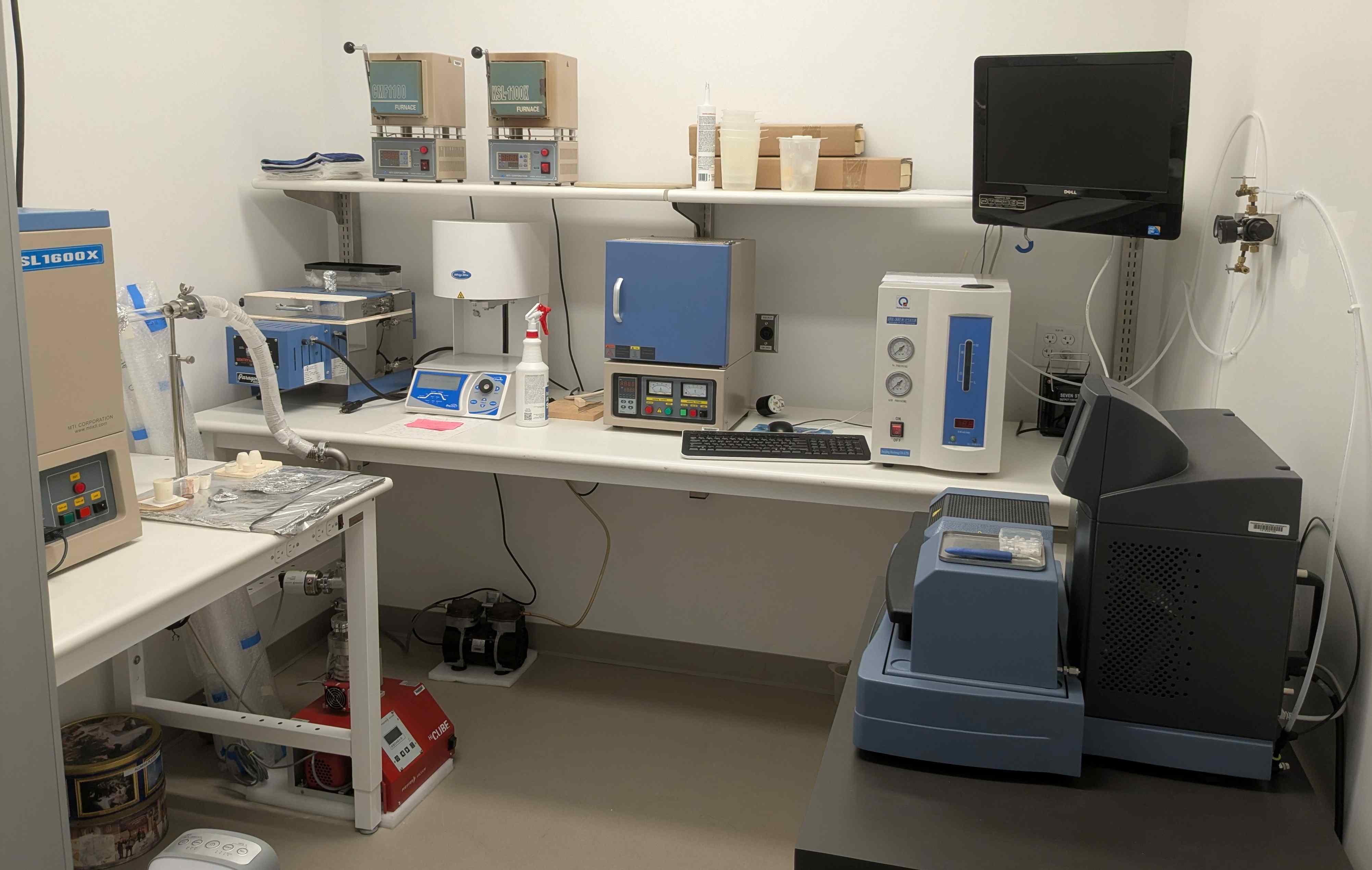
Furnaces
Our furnaces and furnace room equipment is allowing us to perform effectively
vacuum and in atmosphere solid-state synthesis of novel materials. Bot regulated low
and ultrahigh vacuum annealing is possible. To accelerate the finding of required
regimes of annealing, we exploit the Q600 (by TA Instruments) thermal analyzer— it combines Thermogravimetric Analysis (TGA) and Differential Scanning Calorimetry
(DSC) in one instrument. It measures mass change as a function of temperature or time
under controlled atmosphere (air, nitrogen, argon, etc.).
Its key specifications are: Temperature range: Ambient → 1500 °C; Heating rate 0.1
– 100 °C/min; Balance sensitivity~0.1 µg; Sample mass up to ~200 mg; Dual gas switching.
Simple calibration and automation with TA Universal Analysis software.
Infrastructure
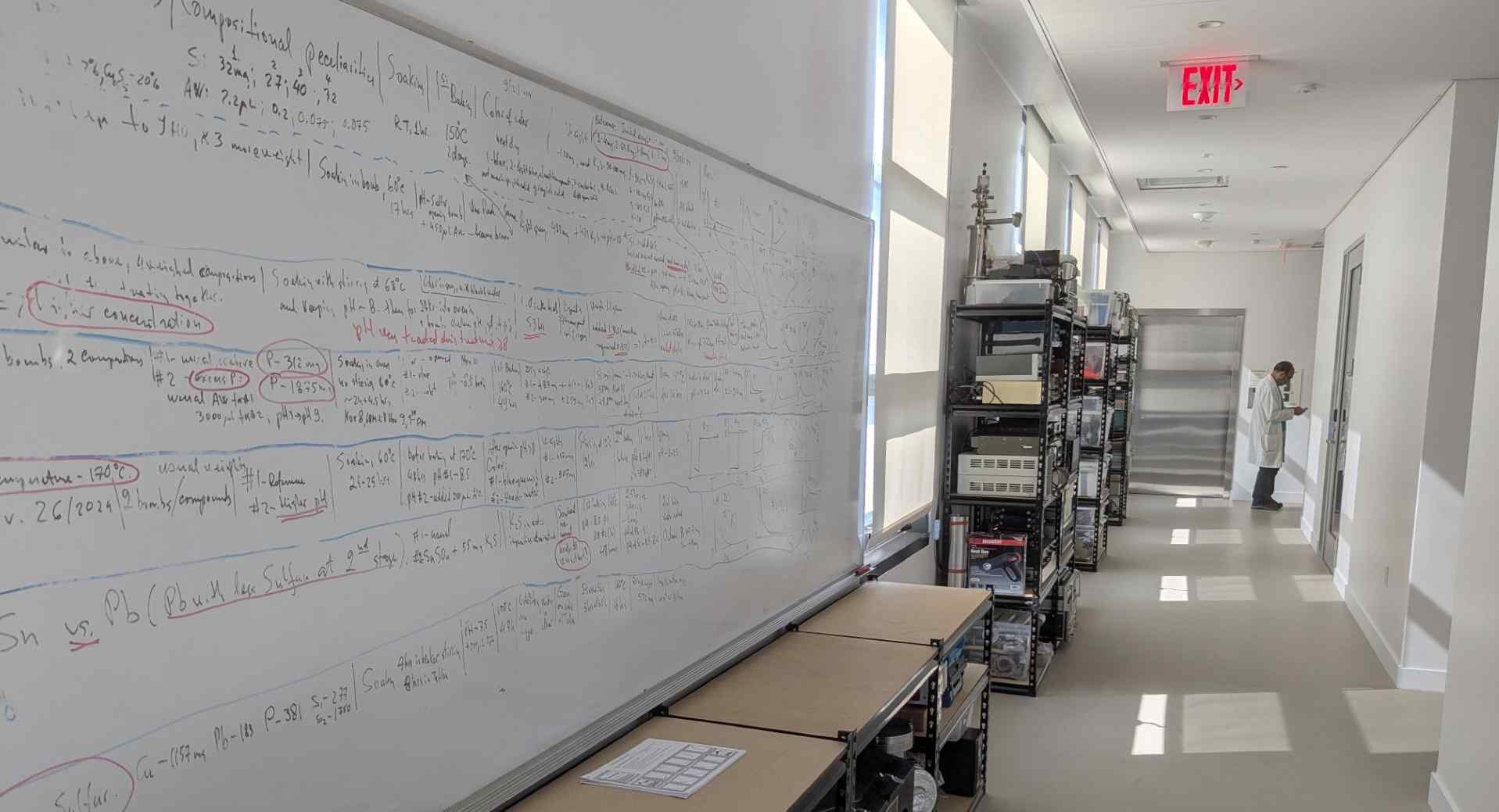
These hydrothermal reactors are with Teflon liners and are being used for novel materials hydrothermal synthesis.
Custom Attachments
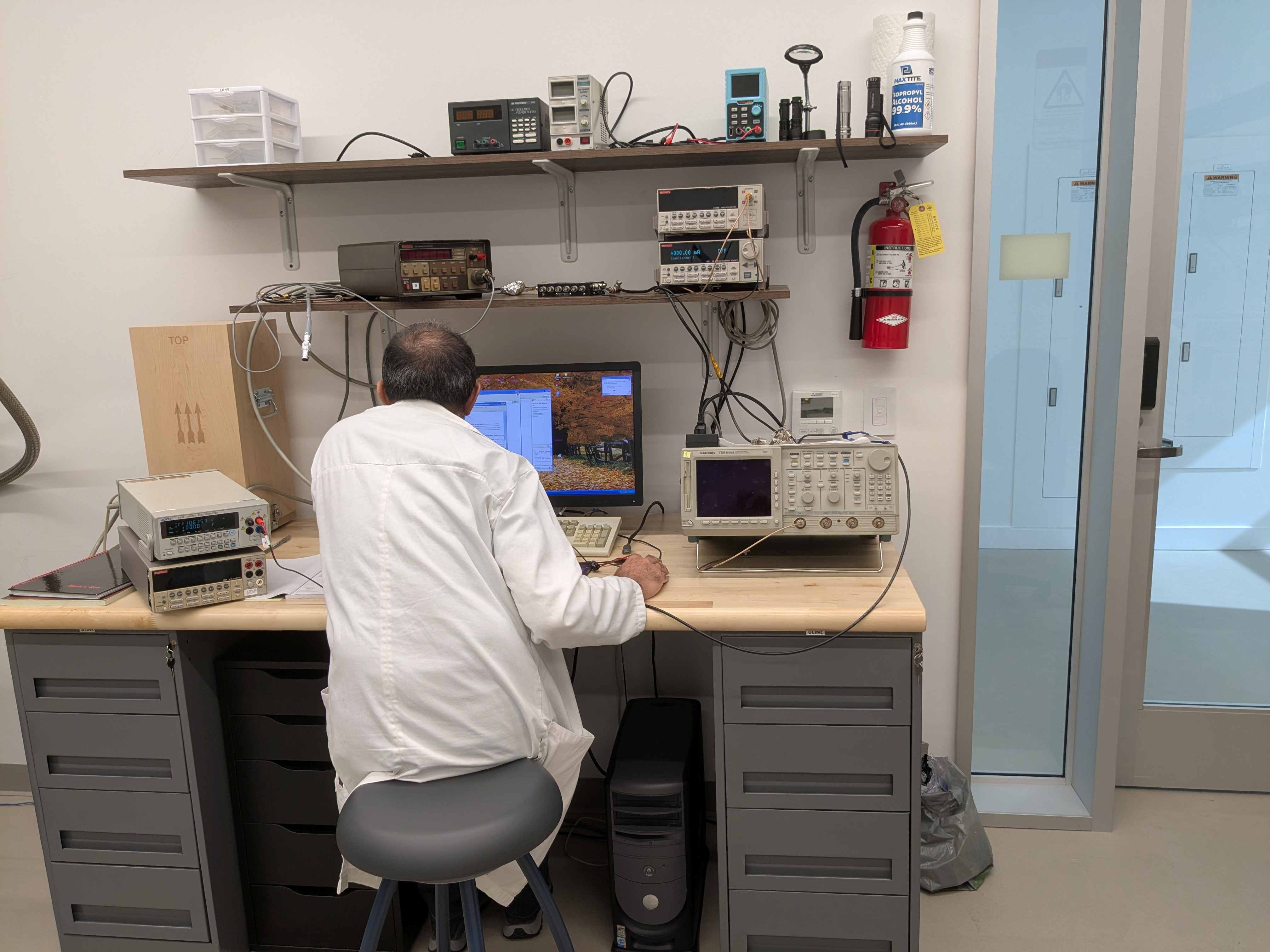
The PPMS has auxiliary electronics for custom tasks like exploration of superconducting electronic devices.
Major results are summarized in our publication:
- “Serendipitous vs. Systematic Search for Room-Temperature Superconductivity”
Further work includes:
- Observation of possible superconductivity above 40 K in rhenium-doped strontium
ruthenates
- Evidence for quantum criticality in doubly substituted YBCO ceramics
- Reproduction of Dr. Kawashima’s results
In 2017, with joint ONR–Chapman support, we organized the 2nd International Workshop “Towards Room-Temperature Superconductivity: Superhydrides and More”, which attracted researchers from many countries.