»Helping Students Build Knowledge
Knowledge is information that encompasses domain-specific facts, rules, and relationships stored in our long-term memory.
There are different types of knowledge:
|
Declarative |
Facts, terminology |
Foundational, important for novices |
|
Procedural |
Steps, sequences |
|
|
Conceptual |
Relationships |
Integration, more advanced |
|
Conditional |
Knowing when and why to use which knowledge |
Application, most advanced |
Knowledge networks mainly consist of two types of knowledge structures:
|
Semantic networks |
Nodes (knowledge) and links (relationships) |
Shows how concepts are linked to each other |
|
Schemas |
Mental templates |
Our cognitive blueprints of concepts, objects, roles, and events |
We build knowledge by moving information from our working memory into our long-term memory. We can increase the likelihood of this happening via:
- Elaborative encoding: Linking new information to existing knowledge.
- Class tip: Activate prior knowledge by asking students to reflect on what they already know, brainstorming, and/or scenarios with familiar concepts.
- Semantic/Deep processing: Focusing on meaning and connections.
- Class tip: Ask students to explain concepts in their own words, relate them to the real world, compare/contrast them with related concepts.
- Dual coding: Combining words and visuals (diagrams, concept maps).
- Class tip: Present graphical organizers (diagrams, concept maps, hierarchies, flow charts, simple sketches) alongside verbal information.
- Chunking: Grouping information into meaningful, coherent units.
- Class tip: Present or have students organize content in clear categories, themes, hierarchies, stages, etc.
- Generation: Having students create examples, visuals, summaries.
- Class tip: Ask students to generate examples, questions, visuals, summaries, etc. This works very well for more advanced students, not for novices.
1. What is knowledge?
Knowledge is information that encompasses domain-specific facts, rules, and relationships.
1.1 Different types of knowledge
|
Name |
Knowing… |
“Level" |
Consists of / Encompasses |
Examples |
|
Declarative (factual) |
…that… |
Foundation |
Facts, basic elements, terminology |
Paris is the capital of France; the value of pi |
|
Procedural (factual) |
…how to… |
Foundation |
Steps and order (also the above) |
Order of operations in math; lab routines |
|
Conceptual |
…how and why knowledge relates |
Integration |
Frameworks, theories, principles, structures, systems, relationships |
Understanding ecosystems; how different organs work together |
|
Conditional |
…when and why to… (use what you know) |
Application |
Strategic application of knowledge in context |
Choosing a treatment; selecting a statistical test |
It is important to understand that students will not spontaneously develop conceptual and conditional knowledge: we need to explicitly help students connect, organize, and contextualize knowledge.
1.2 Suitability/Relevance of different types of knowledge
The “Level” provided in the table above signals what types of knowledge we should be focusing on building in our students depending on their level of expertise:
- In absolute novices, we want to focus on building foundational knowledge.
- As students become more familiar with this knowledge, we want them to focus on how knowledge relates to each other and finally on recognizing when and why to use which knowledge.
2. How is knowledge structured?
|
Structure |
Format |
Focus |
|
Semantic network |
Nodes and links |
Relationships between concepts |
|
Schema |
Mental template |
General situation structure |
|
Script |
Event sequence |
Routine actions |
|
Knowledge network |
Incorporates any and all of the above |
Knowledge across a domain (e.g., medical knowledge, academic knowledge) |
2.1 Semantic networks
A semantic network (see Figure 1 below for an example) represents concepts as nodes and relationships as the links between these nodes. Relationships can take on a variety of forms (e.g., is-a, has-a, can-do, etc.).
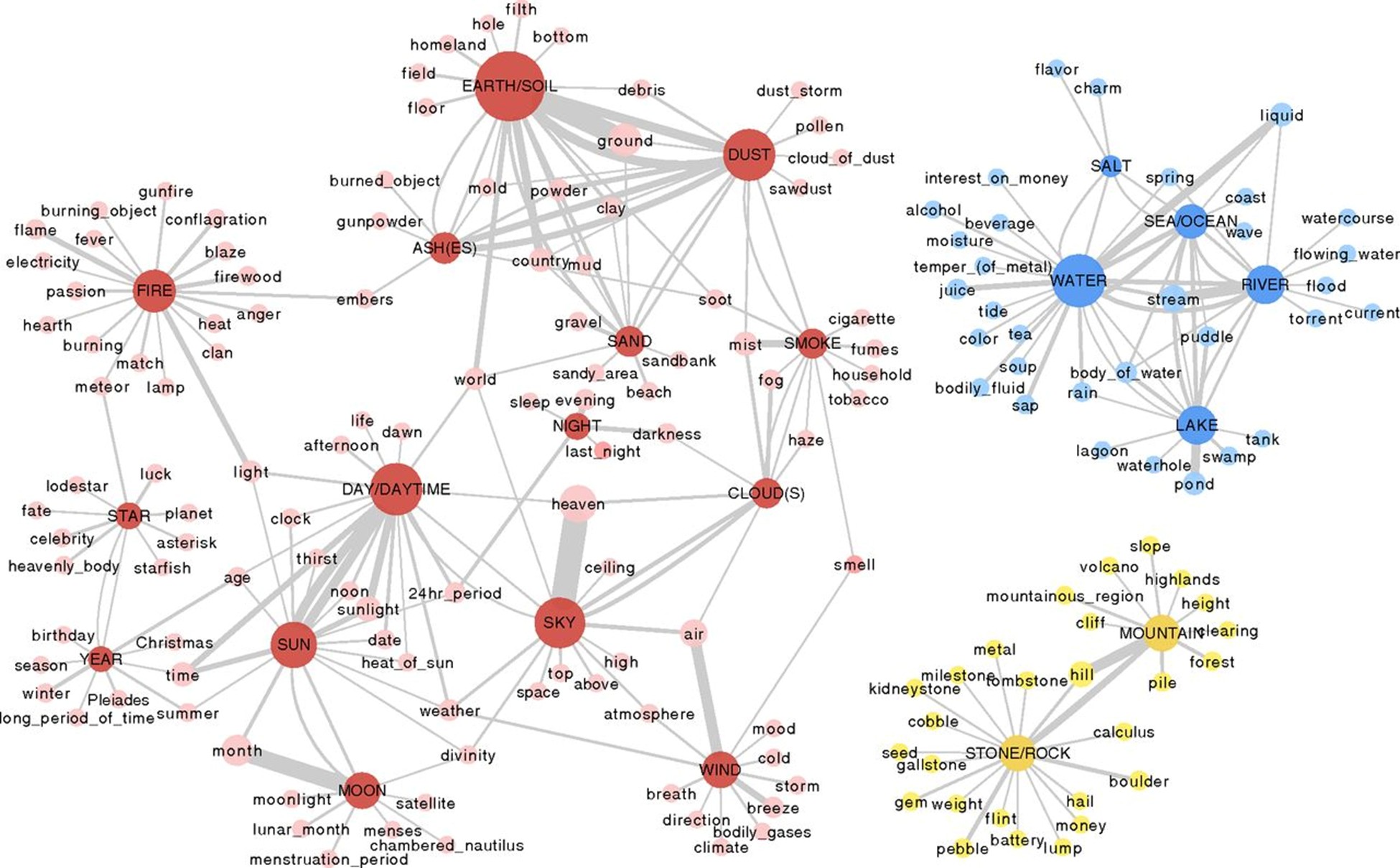
Figure 1. Example of a semantic network
2.2 Schemas
A schema is a mental framework that represents organized knowledge about concepts, objects, roles, or events. Schemas serve as cognitive blueprints that help us predict, understand, and respond to the world efficiently.
Common types of schemas:
- Role schemas: expectations for behavior in specific roles. For example, the behavior you may expect from a “student” or “professor”; “friend” or “colleague”; “coach” or “patient”.
- Person schema: knowledge about specific people or types of people. For example, your idea of a “friendly neighbor” or “strict professor”.
- Object schemas: knowledge about objects and their typical properties. For example, a “laptop” has a keyboard and screen and is portable; a “classroom” generally has desks, a projector/screen, and a blackboard or whiteboard.
- Scripts: event-based schemas that represent the typical sequence of actions or events. For example, “attending a lecture” includes entering the classroom, finding a seat, listening and taking notes; “eating at a restaurant” includes entering the restaurant, being seated, browsing the menu, and ordering food and drinks.
3. How do we build knowledge?
For our intents and purposes, we can equate knowledge to information stored in long-term memory. Therefore, we will equate building knowledge to storing information in long term memory.
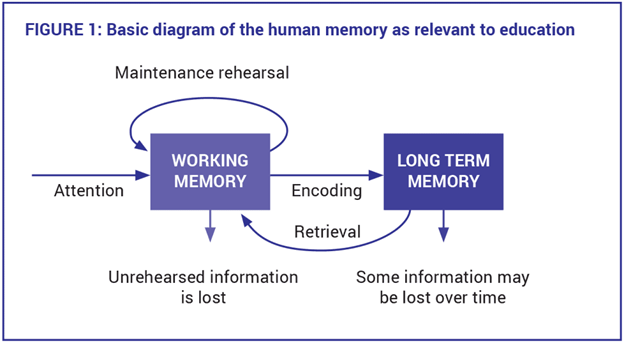
Figure 2. A simplified overview of the basic processes of human memory
In cognitive psychology, we refer to the process of moving information from our working memory (our short-term, active memory system) to our long-term storage as encoding.
There are different ways in which we can increase the likelihood that information will be successfully encoded into long term memory.
3.1 Encoding strategies
Below, five major encoding strategies are outlined. For each strategy, an explanation is provided as to how they increase the likelihood of successful encoding (by linking every strategy to the aforementioned knowledge structures), as well as specific strategies you can use in class.
1. Elaborative encoding: Linking new information to prior knowledge—by integrating new information into existing knowledge structures, we leverage what students already know to make new material more meaningful and easier to retain.
- In class: Activate students’ prior knowledge[1] before introducing new material by asking them to reflect on what they already know about the material, using a short brainstorming or think-pair-share activity, or providing a brief scenario/example that draws on familiar concepts.
2. Semantic/Deep processing: Thinking about the material in terms of meaning and how it relates to prior knowledge deepens connections within existing knowledge structures, generating an understanding rather than forcing students to rely on simple memorization.
- In class: Ask students to explain concepts in their own words, relate them to real-world examples/situations, compare and contrast related concepts, or identify why the concept matters in their field of study or their lives.
3. Dual coding: Pairing verbal information with visuals (e.g., diagrams, concept maps) strengthens connections between ideas and supports understanding by providing students with a visual organization of complex information—providing information in multiple representational formats makes relationships (e.g., hierarchies, categories) explicit and shows students how information fits together within knowledge structures.
- In class: Pair words (verbal or written) with visuals, preferably graphical organizers like hierarchies, diagrams, concept maps, flow charts, simple sketches, etc. This works particularly well for novices—if you are teaching more advanced students, you may ask students to generate these visuals themselves (see below under Generation).
4. Chunking: Grouping related pieces of information into meaningful units (e.g., categories, themes, stages) reduces cognitive load and makes the information easier to remember by organizing details and allowing the brain to treat multiple details as one organized concept—after all, it’s easier to incorporate one larger, organized concept into knowledge structures than many smaller, seemingly unrelated concepts.
- In class: Present content in clear categories, themes, hierarchies, stages, etc. You can also have students do this themselves by asking them to group examples under the correct category or theme, organizing concepts hierarchically, organizing steps in a logical sequence, etc. Make sure to check their work or provide correct answers.
5. Generation: Having students create content (e.g., produce answers, examples, visual overviews, summaries) rather than passively receiving it enhances encoding by promoting active engagement—which requires retrieving related concepts from their existing knowledge and integrating them into their knowledge networks, creating multiple associations—and deep processing—which requires thinking about why and how something fits with prior knowledge, embedding the new information into existing knowledge structures.
- In class: Prompt students to produce something—have them generate examples, questions, or brief summaries during class to reinforce encoding. However, research on novices shows they benefit much more from instructor-provided worked examples (i.e. providing them with a worked-out answer to a question) and graphical organizers, as this models the required (problem-solving) processes/strategies and provides a framework for new information. Generating these themselves increases cognitive load to an undesirable degree, as they should be focusing on understanding the information at this stage instead of generating. However, more advanced students benefit greatly from generation! For a larger challenge, ask them to generate something without checking their notes.
[1] This is also a great opportunity to correct any incorrect or unsuitable prior knowledge