»Fowler School of Engineering Seminar Series
More speakers to come this semester! Be sure to check back!
Seminar Series Fall 2022
Sept. 15: Pamela Peralta-Yahya, Georgia Institute of Technology
Sept. 15, 2022
Pamela Peralta-Yahya, Georgia Institute of Technology
Talk Title: Enabling tools for drug discovery and chemical bioproduction
12-1 p.m.
Location: Ideation Zone
Host: Andrew Lyon
Abstract:
In humans, G protein-coupled receptors (GPCRs) detect a myriad of chemical signals,
from hormones and neurotransmitters to odors and flavors, ultimately resulting in
genomic transcriptional changes. Transduction of these signals results in the regulation
of multiple biological process, from cell migration and proliferation, to inflammation
and immune responses. In the first part of the talk, I will cover the development
and application of GPCR-based assays for 1) the discovery of drug leads that target
medically-relevant GPCRs, 2) the deorphanization of olfactory GPCRs to enable their
study outside the olfactory tissue, and 3) the rapid screening of chemical producing
microbes toward high-throughput metabolic engineering applications. In the second
part of the talk, I will focus on our engineering of biological systems for the production
of chemicals from renewables. In particular, I will highlight our recent work on 3rd
generation biorefineries and how we are producing chemicals and fuels from carbon
dioxide.
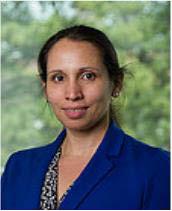 Pamela Peralta-Yahya:
Pamela Peralta-Yahya graduated from Macalester College in 2003 with a double major
in Chemistry and Biology. She earned her Ph.D. in Chemistry with Prof. Virginia Cornish
at Columbia University and was a postdoctoral researcher under the advisement of Prof.
Jay Keasling at the University of California, Berkeley/Joint BioEnergy Institute.
In 2012, Prof. Peralta-Yahya joined the faculty at Georgia Tech, where she conducts
research at the interface of biochemistry and engineering; she was tenured as an Associate
Professor in 2019. Her laboratory brings together principles, concepts and techniques
from organic chemistry, biochemistry, and chemical engineering to expand the sensing
and synthetic capabilities of biological systems. Specifically, her research group
focuses on engineering G-protein coupled receptor (GPCR)-based sensors for biotechnology
and biomedical applications, and the engineering of biological systems for the production
of chemicals from renewables. Her research has resulted in 34 publications and several
patents. Prof. Peralta-Yahya has been recognized for her research by awards including
a DARPA Young Faculty Award (2014), a DuPont Young Professor Award (2014), a Kavli
Fellowship (2016) and an NIH MIRA Award (2017).
Sept. 20: Dr. Kenneth Lamb, Cal Poly Pomona
Sept. 20, 2022
Dr. Kenneth Lamb, Cal Poly Pomona
Talk Title: The Intersection of maker spaces, entrepreneurship and leadership development
12-1 p.m.
Location: Ideation Zone
Hosts: Nicole Wagner/Nasim Estakhri
 Abstract:
Hands-on learning in maker spaces can be a great way to develop an entrepreneurial
mindset, as well as teamwork, communication and visioning skills that develop future
leaders. I hope we can discuss ideas on how to use maker spaces to be more than a
place to learn how to make cool stuff.
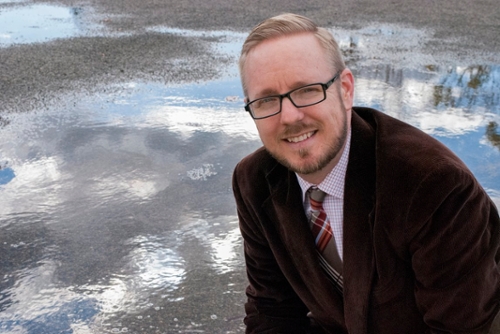
Kenneth Lamb:
Kenneth Lamb is the Faculty director of the Student Innovation Idea Labs at Cal Poly
Pomona which is the office that oversees the campus maker spaces and the extra-curricular
entrepreneurial programming. He is also the lead faculty for the Engineering Leadership
program in their college of engineering as well as a professor of civil engineering.
Sept. 26: Cassandra Donatelli, Fowler School of Engineering
Sept. 26, 2022
Cassandra Donatelli, Fowler School of Engineering
12-1 p.m.
Location: Ideation Zone
Oct. 4: Emad Arasteh, Fowler School of Engineering
Oct. 4, 2022
Emad Arasteh, Fowler School of Engineering
Talk Title: System Level Modeling and Simulation: Designing Future Computer Systems12-1
p.m.
Location: Ideation Zone
Abstract:
The emerging software applications increasingly require more computation and storage
resources. To meet the demand of these new software applications, we need to rethink
the traditional design of computer systems by early attention to efficiency and programmability.
Electronic System-Level (ESL) design using SystemC enables effective performance estimation,
design space exploration, and gradual refinement. In this talk, I present our latest
research findings on increasing model parallelism and early detection of memory bottlenecks
for Deep Neural Networks (DNN).
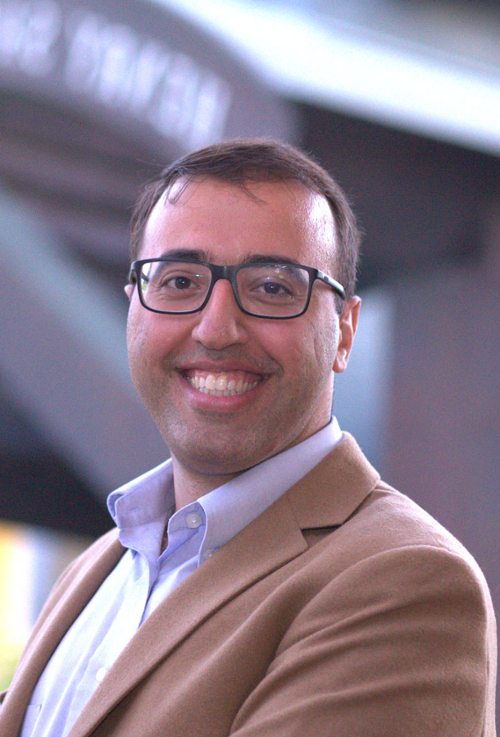 Emad Arasteh:
Emad Arasteh is an assistant professor of electrical engineering and computer science
in Fowler School of Engineering at Chapman University. He received the Ph.D. degree
in computer engineering from University of California, Irvine and M.Sc. degree in
electronic design from Lund University in Sweden. His current research interests include
system-level modeling and design of embedded systems, deep neural networks, programming
models for processing-in-memory, and simulation of computational models on massively
parallel computers. Previously, he worked on a wide range of hardware and software
systems for telecommunication, security, multimedia, and semiconductor industries.
Oct. 10: David Cuccia, Modulim
Oct. 10, 2022
David Cuccia, Modulim
Talk Title: Spatial Frequency Domain Imaging (SFDI): quantitative microvascular insights
that empower clinicians to save limbs and lives
12-1 p.m.
Location: Ideation Zone
Host: Alex Kurz
More information
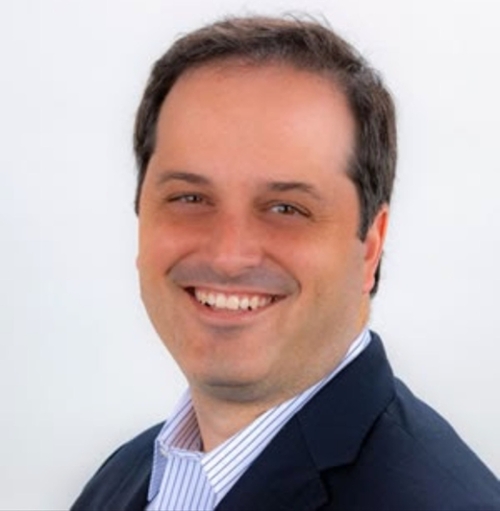 David Cuccia:
Dr. David Cuccia is CTO and founder of Modulim, an Irvine-based medical device company,
focused on improving lives for patients with Diabetes and vascular disease. David
has a B.S. in Physics and a Ph.D. in Biomedical Engineering from UC Irvine. He founded
Modulim in 2007, based on his dissertation work on SFDI, and raised $21M in grant
and private venture capital to bring SFDI to market. David has co-authored over 100
publications and has more than 4,000 citations in biomedical optics journals. David
is also a Senior Fellow for SPIE, the International Society for Optical Engineers,
and in 2015 he was inducted into the inaugural class of UC Irvine's Engineering Hall
of Fame.
Oct. 17: Anne Marie Piper, UCI
Oct. 17, 2022
Anne Marie Piper, UCI
Talk Title: Rethinking Design for Accessibility
12-1 p.m.
Location: Ideation Zone
Host: LouAnne Boyd
More information
Abstract:
Approximately 61 million Americans, or one in four U.S. adults, have a disability
that affects daily life. Despite the prevalence of disability across the lifespan,
accessibility is typically an afterthought in technology design. Discussions of accessibility
often center on checklists of requirements and whether or not a system has particular
features. In this talk, I will argue for a view of accessibility that is collaboratively
negotiated, situated, and enacted through sociomaterial relations. Grounded in extensive
field work, I will present three cases of design for accessibility that shift how
we think about building systems with and for individuals with disabilities. These
projects detail new systems for collaborative meaning-making in the context of dementia,
online social advocacy among blind and visually impaired older adults, and ability-diverse
group work and design. Collectively, these projects reveal the interactive nature
of accessibility that is often missing in individualistic system design and call attention
to the importance of the social and political dimensions of accessibility alongside
the technological.
Anne Marie Piper: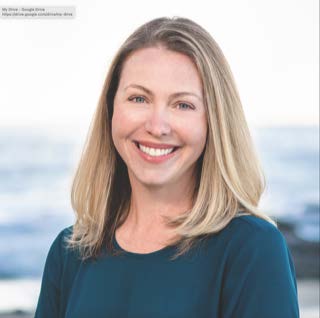 Anne Marie Piper is an Associate Professor in the Department of Informatics at The
University of California, Irvine. Her research in human-computer interaction and accessible
computing aims to create more equitable and inclusive digital experiences for people
of all ages and abilities. Anne Marie's prior and ongoing work focuses on designing
new technologies for collaborative work among ability-diverse teams of professionals
and academics; developing accessible content production tools for blind artists, writers,
and musicians; and leveraging the arts as a form of expression and resource for designing
alongside people with dementia or speech-language impairments. Her research and teaching
has been recognized with an NSF CAREER Award, UC-Irvine , Alumnae of Northwestern
Award for Curriculum Development, Best Paper Awards and Nominations at ACM CHI, CSCW,
DIS, and ASSETS, and a UC-San Diego Interdisciplinary Scholar Award. Anne Marie received
her PhD in Cognitive Science from the University of California, San Diego, MA in Education
from Stanford University, and BS in Computer Science from Georgia Tech. Prior to joining
UC-Irvine, she was a tenured faculty member at Northwestern University.
Anne Marie Piper is an Associate Professor in the Department of Informatics at The
University of California, Irvine. Her research in human-computer interaction and accessible
computing aims to create more equitable and inclusive digital experiences for people
of all ages and abilities. Anne Marie's prior and ongoing work focuses on designing
new technologies for collaborative work among ability-diverse teams of professionals
and academics; developing accessible content production tools for blind artists, writers,
and musicians; and leveraging the arts as a form of expression and resource for designing
alongside people with dementia or speech-language impairments. Her research and teaching
has been recognized with an NSF CAREER Award, UC-Irvine , Alumnae of Northwestern
Award for Curriculum Development, Best Paper Awards and Nominations at ACM CHI, CSCW,
DIS, and ASSETS, and a UC-San Diego Interdisciplinary Scholar Award. Anne Marie received
her PhD in Cognitive Science from the University of California, San Diego, MA in Education
from Stanford University, and BS in Computer Science from Georgia Tech. Prior to joining
UC-Irvine, she was a tenured faculty member at Northwestern University.
Oct. 24: Tom Bell, Fowler School of Engineering
Oct. 24, 2022
Tom Bell, Fowler School of Engineering
Talk Title: Software Engineering and the Law
12-1 p.m.
Location: Ideation Zone
Host: Alex Kurz
More information
Abstract:
Why should software engineers care about the law? For lots of reasons, ranging from
making it rich to keeping out of jail. This presentation will open with a quick overview
of some of the most important legal issues that software engineers face today. The
discussion will then focus on cryptocurrencies, DAOs, prediction markets, and other
forms of decentralized finance.
 Prof. Tom W. Bell:
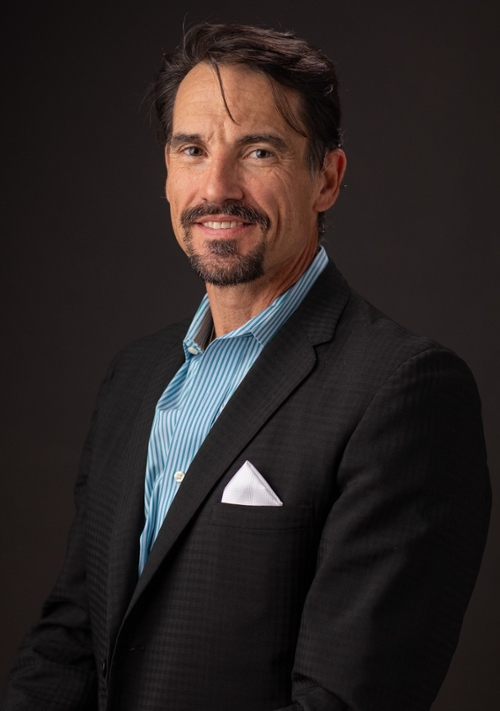
Prof. Tom W. Bell earned a J.D. from the University of Chicago, practiced law in Silicon
Valley and Washington, D.C., and served as a policy director for the Cato Institute
before joining the faculty of Chapman University Fowler School of Law. He teaches
all of the first-year common law courses and electives in high-tech, entertainment,
and intellectual property. Bell writes about special jurisdictions, copyright, Internet
law, prediction markets, and the Third Amendment (the one about quartering troops).
He created Ulex, the open source legal system, used in Próspera ZEDE’s Roatán Common
Law code and the Catawba Indian Nation’s Digital Economic Zone. Bell recently recorded
an updated audio version of Your Next Government? From the Nation State to Stateless
Nations (Cambridge University Press 2018). He serves as Editor-in-Chief of the Journal
of Special Jurisdictions and advises The Seasteading Institute (pro bono), Pronomos
Capital, and Free Society Project, among others.
Nov. 1: Dr. Qiang Huang, USC
Nov. 1, 2022
Dr. Qiang Huang, USC
Talk Title: Engineering-Informed Machine Learning for Additive Manufacturing Accuracy
Control
12-1 p.m.
Location: Ideation Zone
Host: Yuxin Wen
More information
Abstract:
As a trend of future manufacturing (FM), consumer demand increasingly shifts to personalization
and customization. One key technological barrier is to ensure quality and reduce costs
for low-volume production of a huge variety of products. Transforming experience-driven
quality control (QC) into fabrication-aware, computation-driven QC is at the forefront
of technological 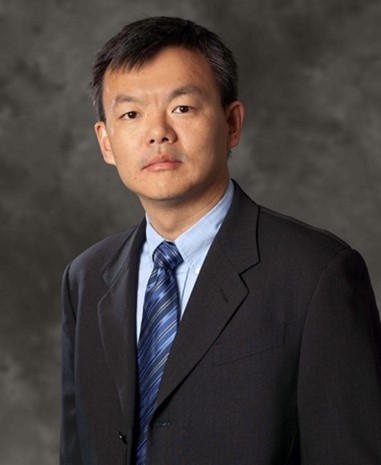 competition in FM. Physical modeling and simulation of additive manufacturing (AM)
is still computationally prohibitive for timely QC. Applying popular AI techniques
to automate QC not only demands large amounts of costly AM data, but also falls short
of gaining engineering insights for knowledge generalization and adaptation. This
talk presents engineering-informed machine learning research for AM. Topics include
domain-informed convolution modeling and learning of layer-by-layer fabrication for
shape accuracy prediction; optimal compensation of 3D shape deviation; and engineering-informed
transfer learning based on effect equivalence.
competition in FM. Physical modeling and simulation of additive manufacturing (AM)
is still computationally prohibitive for timely QC. Applying popular AI techniques
to automate QC not only demands large amounts of costly AM data, but also falls short
of gaining engineering insights for knowledge generalization and adaptation. This
talk presents engineering-informed machine learning research for AM. Topics include
domain-informed convolution modeling and learning of layer-by-layer fabrication for
shape accuracy prediction; optimal compensation of 3D shape deviation; and engineering-informed
transfer learning based on effect equivalence.
Dr. Qiang Huang:
Dr. Qiang Huang is currently a Professor at the Daniel J. Epstein Department of Industrial
and Systems Engineering, University of Southern California (USC), Los Angeles. His
research focuses on AI and Machine Learning for Manufacturing, in particular, Machine
Learning for Additive Manufacturing (ML4AM). He was the holder of Gordon S. Marshall
Early Career Chair in Engineering at USC from 2012 to 2016. He received IISE Fellow
and ASME Awards, NSF CAREER award, and 2021 IEEE CASE Best Conference Paper Award,
2013 IEEE Transactions on Automation Science and Engineering Best Paper Award, among
others. He has five patents on ML4AM. He is a Department Editor for IISE Transactions
and an Associate Editor for ASME Transactions, Journal of Manufacturing Science and
Engineering.
Nov. 7: Lauren Perry, Aerospace Corporation
Nov. 7, 2022
Lauren Perry, Aerospace Corporation
Talk Title: Failure is not an Option: Pitfalls of Artificial Intelligence in High-Consequence
Environments
12-1 p.m.
Location: Ideation Zone
Host: Erik Linstead
More information
 Lauren Perry is a Senior Project Engineer in the Space Applications Group at The Aerospace
Corporation. Her work incorporates AI/ML technologies into traditional software development
programs for the intelligence community, DOD, and commercial customers. Previously,
she was the analytical lead for a DOD project established to improve joint operability
within the Integrated Air and Missile Defense (IAMD) Family of Systems and enhance
air warfare capability. Perry was also a reliability engineer at Lockheed Martin Space
Systems Company. She has a background in experimental design, applied statistics,
and statistical engineering for the aerospace domain.
Lauren Perry is a Senior Project Engineer in the Space Applications Group at The Aerospace
Corporation. Her work incorporates AI/ML technologies into traditional software development
programs for the intelligence community, DOD, and commercial customers. Previously,
she was the analytical lead for a DOD project established to improve joint operability
within the Integrated Air and Missile Defense (IAMD) Family of Systems and enhance
air warfare capability. Perry was also a reliability engineer at Lockheed Martin Space
Systems Company. She has a background in experimental design, applied statistics,
and statistical engineering for the aerospace domain.
Nov. 15: Dr. Sara Eftekharnejad, Syracuse University
Nov. 15, 2022
Dr. Sara Eftekharnejad, Syracuse University
12-1 p.m.
Location: Ideation Zone
Host: Nasim Estakhri
Talk Title: Modeling the Interdependent Power Grid Uncertainties
12-1 p.m.
Location: Ideation Zone
Host: Erik Linstead
More information
Abstract:
The ever-growing reliance on power systems has initiated research and developments
in what we refer to as Smart Grids. What constitutes a smart grid is a collection
of modernizations that occur at various levels in power systems, namely distribution,
transmission, and generation of power. Enhanced real-time situational awareness and
increased integration of renewable energy resources are two critical aspects of the
smart grids that ensure sustainable and reliable sources of electricity. However,
the unprecedented increase in intermittent wind and solar energy resources along with
growing severe weather patterns has the potential to put these objectives at odds
with each other. In this talk, the impacts of increased uncertainty in grid operations
and planning on real-time situational awareness, and specifically on the ability to
predict impending failures, will be explored. Next, data-driven generation uncertainty
models and predictive failure models as possible solutions for enhancing situational
awareness will be discussed.
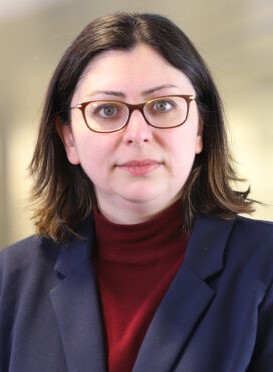 Dr. Sara Eftekharnejad:
Dr. Sara Eftekharnejad is an assistant professor in the Department of Electrical Engineering
and Computer Science at Syracuse University. Prior to that, she held positions at
the University of Idaho and Tucson Electric Power Company. She received her Ph.D.
degree in Electrical Engineering from Arizona State University, Tempe, AZ in 2012.
Her research interests include uncertainty quantification for power system operations
and planning, real-time power system operations, and power system resiliency. Dr.
Eftekharnejad’s research has been funded by several federal and non-federal grants,
and she is the recipient of the 2022 CAREER Award from the National Science Foundation.
She is an associate editor of the IEEE PES Transactions on Sustainable Energy and
IEEE PES Letters.