• Wilkinson College students listening intently to lecturer
Wilkinson College of Arts, Humanities, and Social Sciences

»Dual MA in English / MFA in Creative Writing

The Dual MA English/MFA Creative Writing program at Chapman University’s Wilkinson College of Arts, Humanities, and Social Sciences is an innovative three-year program combining the practice and study of creative writing with li terary scholarship. The exciting coursework ranges across literary and critical studies, creative writing, journalism, rhetoric and composition, digital humanities, creative and cultural industries, and linguistics. 

This program is designed especially for students who intend to pursue a career in teaching English and creative writing at the university, community college, or secondary-school level, and graduates have gone on to pursue their Ph.D. Full-time students complete the degree in three years. All graduate classes are offered in the late afternoon or evening.
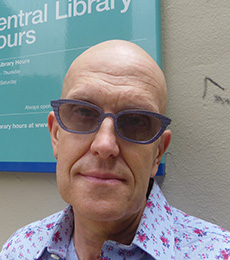

Dr. Ian Barnard
Faculty Highlights
Dr. Ian Barnard
Courses taught: Rhetoric and Composition, Queer Studies
Dr. Rei Magosaki
Faculty Highlight
Dr. Rei Magosaki
Courses taught: Multicultural Literatures of the U.S., Asian-American Literature, U.S. Fiction after 1950, Contemporary U.S. literature, American Short Stories, Japanese Literature in Translation.
Dr. Lynda Hall
Faculty Highlight
Dr. Lynda Hall
Courses taught: Introduction to Fiction, Literature into Film, Jane Austen studies
Professor Mildred Lewis
Faculty Highlight
Professor Mildred Lewis
Courses taught: Techniques in Screenwriting, Film Theory, Caribbean Literature
Dr. Jean Ho
Faculty Highlight
Dr. Jean Ho
Courses taught: Advanced Fiction Workshop, Techniques in Fiction Writing
Dr. Anna Leahy
Faculty Highlight
Dr. Anna Leahy
Courses taught: Advanced Poetry Workshop, Techniques in Poetry Writing

Toggle Section

Application Requirements

Apply now using the Online Application. All applicants must provide the following materials: 

  • Official transcripts from all degree-granting (bachelor’s or master’s degrees) colleges and universities attended.
  • A statement of intent; an essay expressing your reasons for wanting to join the Dual MA English/MFA in Creative Writing program. What are your personal and career goals, and how will this particular degree from Chapman University help you reach those goals? Your essay should be double spaced, size 12 font, and 1-2 pages in length.
  • A portfolio of creative work. You should submit work that best represents your style and demonstrates your potential. The portfolio should include 20-30 pages of fiction or nonfiction OR 10-15 pages of poetry. While the MFA program offers courses in additional genres, please stick to fiction, nonfiction or poetry in the application writing sample. You will be prompted to identify the genre of your portfolio. This genre identification is for the submitted portfolio only, not an indication of any track in the program. While students can take courses in multiple genres, we ask that the application writing sample be in a single genre: fiction, nonfiction or poetry. Please also include your first and last name and selected genre in the document header.
  • A completed 12–15-page literary essay that focuses on an analysis of one or two literary texts. The essay should be informed by contemporary literary, rhetorical, and/or cultural theory and criticism, and demonstrate analytical strengths and critical writing skills. The essay should also reflect a grasp of critical literary skills and the ability to deal with theoretical texts in an effective and knowledgeable manner. Typically, applicants submit a piece of advanced academic writing from an undergraduate English course. Essays should be typed, double-spaced, 12 pt. Times New Roman font, with one-inch margins on all sides.
  • Two letters of recommendation that speak to academic and/or professional preparation, intellectual ability, and aptitude for graduate study.
  • Your resume or curriculum vitae.
  • A graduate admission test is required for applicants with a bachelor's degree cumulative GPA below a 3.0. Applicants with a GPA between 2.5 and 2.99, may be considered for admission by submitting a satisfactory Graduate Record Examination (GRE) with minimum scores of Verbal: 154, Quantitative: 147, and Analytical Writing: 4.0 or by demonstrating significant relevant professional experience. GRE Institution Code: 4047.

Dual degree applications are reviewed simultaneously by separate committees. Prospective students must be admitted by both the MA in English committee and the MFA in Creative Writing committee to be offered admission to the dual program. Applicants may be admitted to one program if not admitted by both committees.

Curriculum

Students complete 51 credits of academic coursework toward the MA and the MFA. These degrees culminate in two separate thesis projects, including a book-length creative project and an essay on literature or rhetoric. For further information on degree prerequisites, admission requirements and a list of courses view the Graduate Course Catalog.

Prospective students are encouraged to explore past students' MA theses for insight into the depth and diversity of research conducted in our program. These projects showcase the creativity, rigor, and intellectual curiosity that define our graduate community. Prospective students can also explore past students' MFA theses for insight into the depth and diversity of creative work conducted in our program. Though our creative writing students’ thesis work is embargoed for professional copyright reasons, these projects showcase the creativity, rigor, and intellectual curiosity that define our graduate community.

Funding Opportunities

  • MFA Creative Writing: Six competitive fellowships (three each year) with full tuition waiver and a fellowship payment of $18,000, each renewable for a second year and requiring no work obligation. Limited full-tuition scholarships are also available. Applicants to the dual degree are considered and may be awarded MFA fellowships; however, the fellowship will only last two years (the length of time to complete the MFA degree)
  • Paid Graduate Teaching Assistantships: For select second-year students in the competitive Graduate Student Instructor (GSI) program teaching in our undergraduate English Composition courses. This assistantship allows first-year students who take the spring class in Teaching Composition to apply for one of the GSI positions for the following fall. The selected GSIs each teach a section of composition in the fall, while also enrolled together in a second pedagogy class. This position does not come with an award that covers tuition but does come with a teaching stipend —worth approximately $6,000 per course taught
  • Paid Graduate Assistantships: Starting between $18 and $34 an hour for 9 to 19 hours per week, for select students starting as early as their first year of study with either department faculty members or in offices across the university.
  • We also have some students teaching with community organizations that are not directly related to our program. This speaks to the opportunities our students seek and create and the value of the expertise they are developing.
  • Financial aid often contains mainly student loans. In addition to any program funding, you will also receive your “financial aid package” from the Graduate Financial Aid Office after you have been admitted. Regarding loans, please contact their office directly with any questions at gradfinaid@chapman.edu.

Important Dates

  • Fully completed applications received by the February 1 priority deadline are automatically considered for fellowship.
  • Offers of fellowship are released with offers of admission, typically by March 15.

Live Information Session


Watch our last virtual information session from fall of 2024!

Application Deadlines


Apply now using the Online Application. Submit your application and all supporting documents by the deadline listed below. 

Applications received after these deadlines will be considered on a rolling basis as space is available.

  • For Fall Semester, including fellowship and scholarship consideration: February 1
  • For Spring Semester: November 1