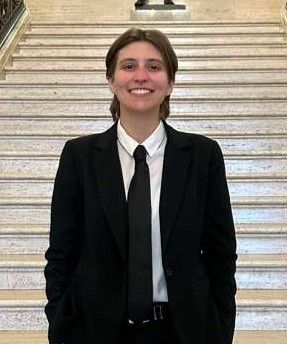
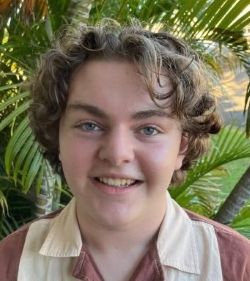
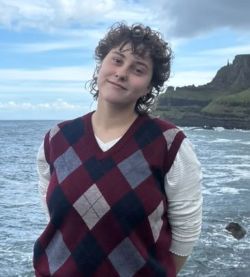
• Peace and Justice Studies students at end of year awards.
    Peace and Justice Studies students at end of year awards.
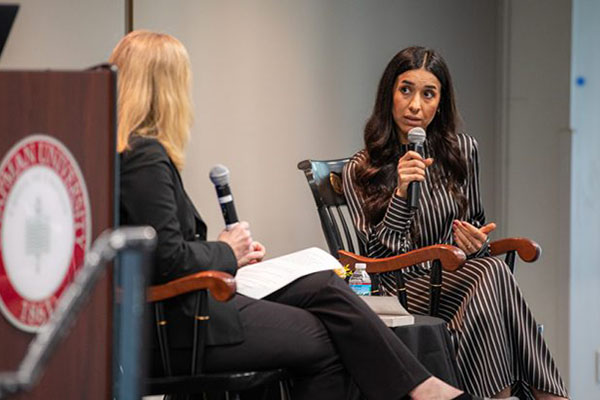
  • Nadia Murad
    Chapman Presidential Fellow and 2018 Nobel Laureate Nadia Murad.
The Department of Peace and Justice Studies

Wilkinson College of Arts, Humanities, and Social Sciences

»Department of Peace & Justice Studies

The Peace & Justice Studies program offers a major and minor which encourage students to analyze the sources of social conflict and explore the potential for the nonviolent resolution of such strife. The problem-centered, multicultural, and interdisciplinary program is premised on the belief that the analysis of conflict demands a thorough synthesis of insights from various fields of knowledge.

Peace & Justice Studies is an inherently interdisciplinary major, it is built around a core of five courses: Introduction to Peace Studies, Research Methods: Peace Studies, Mediation and Conflict Resolution, Nonviolent Social Change and Conflict Resolution: Advanced Theory and Practice. These are supplemented with five additional courses offered in Peace & Justice Studies or related fields. Examples include:

  • Peace and Conflict in the Middle East
  • Race and Change in the U.S. and South Africa
  • Vietnam: War, Peace & Legacy
  • International Law
  • International Organization and World Order
  • Gender Roles

Finally, the Peace & Justice Studies student takes a concentration in one department of four courses to provide expertise in an area appropriate to his or her career choice. Internships in Peace Studies are encouraged to permit students the possibility of gaining practical experience. Included among the offerings are occasional study tours to countries such as Mexico (Chiapas), Costa Rica, Nicaragua, Cuba, Northern Ireland, Bosnia, Herzegovina, and South Africa. Peace Studies majors are strongly encouraged to consider overseas study.


Toggle Section

Department Learning Objectives

  • Evaluate the micro (psychology and interactional), societal (organizational, institutional, and group-level), and/or macro (international and state-level) causes of current events and major world conflicts, especially those of the 20th and 21st centuries.
  • Use oral and written communication to challenge dominant paradigms of violence and inequalities (including racism, ableism, sexism, economic inequality and religious intolerance) within culture, media and governments.
  • Apply peace research methods of data collection and analysis to assess conflict, inequality, and/or peacebuilding strategies. Methodologies include quantitative & qualitative social science methods, historical analysis, and community-based research; students are expected to understand the ethics and politics of research related to conflict and with marginalized populations.
  • Navigate cultural differences and assess how to apply culturally appropriate techniques related to human rights, peace education, mediation, diplomacy, conflict management, community building, and nonviolent activism; building respect for human dignity and self-reflection
  • Gain an appreciation for the variety of disciplines’ roles in peacebuilding and conflict prevention, management, and resolution.

Why Peace & Justice Studies?

Despite great strides in science and technology, the modern world continues to be plagued by war and social conflicts. A growing number of institutions of higher education have come to the conclusion that just as we have service academies to educate young people in the ways of war, we need Peace & Justice Studies programs to train students how to work toward the peaceful solution of world problems. More than 200 university level Peace Studies programs have emerged across the United States. Chapman, at the forefront of this movement is among the relatively few universities to offer a full scale academic major in this new field. The Chapman Peace & Justice Studies program is premised on the belief that peace implies more than just the absence of war. Positive peace involves social justice as well as non-violent conflict resolution. Peace is something which must be built, using methods which themselves are non-violent.

How Might a Student Use a Degree in Peace & Justice Studies?
Employment opportunities include public service with the government or multi-national institutions such as the United Nations. Specialization in conflict resolution can lead to opportunities in labor management relations or community relations. A wide variety of peace and social action organizations seek persons who are both committed to service and academically grounded in peace and social justice issues. Finally, many churches and religious organizations employ peacemakers.

Academic Program in Peace & Justice Studies
Since Peace & Justice Studies is an inherently interdisciplinary major, it is built around a core of five courses: Introduction to Peace Studies; Conflict Resolution; Political Economy; Nonviolent Social Change; and the Senior Seminar. These are supplemented with five additional courses offered in Peace Studies or related fields. Examples include: Peace and Conflict in the Middle East; Race and Change in the U.S. and South Africa; Vietnam: War, Peace & Legacy; International Law; International Organization and World Order; Gender Roles. Finally, the Peace Studies student takes a concentration in one department of four courses to provide expertise in an area appropriate to his or her career choice. Internships in Peace Studies are encouraged to permit students the possibility of gaining practical experience. Included among the offerings are occasional study tours to countries such as Mexico (Chiapas), Costa Rica, Nicaragua, Cuba, and South Africa. Peace Studies majors are strongly encouraged to study abroad; recent graduates have done so in Ghana, South Africa, Namibia, Kenya, Zimbabwe, Costa Rica, England, Austria, Spain, Morocco, Northern Ireland, and Nicaragua.
Internships and Career Resources

Chapman University and the Wilkinson College of Arts, Humanities, and Social Sciences Career Resources are proud to offer comprehensive personalized career services for students and alumni. Wilkinson students and alumni not only enjoy access to university-wide career services with Career and Professional Development but also program- and industry-specific support with their Wilkinson College Career Advisor, Erin Berthon.

Learn more about Peace Studies Career Resources »

Resources for Learning More about the Current Protests on Policing and for Black Lives

This is a living and changing document—please send further suggestions to David Krausman.

Organizations:

For those going to protests, safety suggestions:

Useful Google Docs with lots of resources for learning, listening, and acting:

Resources for Accountability and Actions for Black Lives:

Leia Fidel
Leia Fidel
(’27 Peace and Justice Studies, Political Science; Women and Gender Studies minor)
Take the time to get to know your PCST faculty because they are some of the most helpful and kind people you will meet. They are dedicated, amazing mentors, who will really help you grow as a student and person with the many countless opportunities they will make available for you!
Karly Redeman
Karly Redeman
(’27, Peace and Justice Studies, Political Science;' Women and Gender Studies minor)
I originally chose Peace and Justice Studies because I wanted to work in the international relations field, looking back on my decision I have no regrets. During my time at Chapman, I have participated in Independent Studies under Dr. Leitz, traveled to 4 countries for experiential learning programs and attended numerous Peace Studies conferences. My best piece of advice is to get involved outside the classroom. Join clubs connected to the department, go on the experiential learning trips and study abroad if you can. Get to know your professors. Everyone in the department is supportive and has a lot of knowledge to share.
Kalea Seaton
Kalea Seaton
(’28, Peace and Justice Studies & Spanish; Disability Studies and Religious Studies minors)
The Peace and Justice Studies department has allowed me to explore my passions for positive peace and social change through unique course offerings, which explore the ways peace and conflict manifest in various contexts, and critically focus on the lived experiences of diverse communities. I am especially grateful for the incredibly supportive and knowledgeable faculty, who have offered mentorship and opened opportunities for independent research, one of the most valuable aspects of my academic career.
Georgia Geagan
Georgia Geagan
(’27 Peace and Justice Studies, Political Science; Environmental Studies minor)
When declaring my majors, I wanted something that would help me understand both the peaceful and violent actions of the world. I believe that it is important for everyone to educate themselves on the atrocities that have occurred throughout history in order to understand the past and prevent new ones from happening. From studying on Chapman’s campus to flying all the way to Bosnia with the department to participate in research, this education has brought so many insightful layers to explore. Regardless of the career path that you may choose, I believe this major will bring you knowledge, empathy, and a need to bring justice into the world!
Ryder Flowers
Ryder Flowers
('29 Peace and Justice Studies, Honors minor)
Being a part of the Peace and Justice Studies program at Chapman has been one of the greatest opportunities I have encountered in my educational journey. Studying nonviolence and its intersection in the international political world, I have grown my foundational understanding in mediation, human rights law, global conflicts, and so much more. One of my favorite memories was going with the Center for International Experiential Learning to Northern Ireland, studying conflict hands-on alongside the amazing Dr. Leitz and my peers. Peace and Justice Studies encourage critical thinking, robust discussion, and comprehensive learning to uphold our humanity and promote a better world for us all.
Tai Wittenberg
Tai Wittenberg
(’26 Political Science, Peace and Justice Studies minor)
I came into Chapman as a Political Science major, but this minor grew out of my love of two classes: Professor Venizelos' Law and Politics of Mass Atrocity, and Dr. Petrovic's Psychology of International Conflict. Some advice I would give to a prospective student would be to feel comfortable bringing up difficult, sensitive, and challenging topics with your professors! They're genuinely eager to engage with you on them.
Vic Bullard
Vic Bullard
(’28 Peace & Justice Studies, Theater)
I joined PCST in my second semester freshman year to add onto my theatre major, and I have had an incredible time! I chose PCST because of its uniqueness and focus on human rights. My favorite PCST classes have been PCST 240 Theories of Peace and Conflict with Dr. Ulas and PCST 393 Peace Communication with Drs. LaBelle and Leitz, where I got to travel abroad to Northern Ireland with the Center for International Experiential Learning! My advice for someone new to the department would be to never hesitate to reach out to your professors if you need anything! The professors in the PCST department are incredible and always willing to help.

Contact Us


Peace & Justice Studies, Smith Hall 202, Chapman University, One University Drive, Orange, CA 92866

Department Chair
Richard Ruppel
ruppel@chapman.edu

Administrative Assistant
Julia Ainley
(714) 532-6026
ainley@chapman.edu