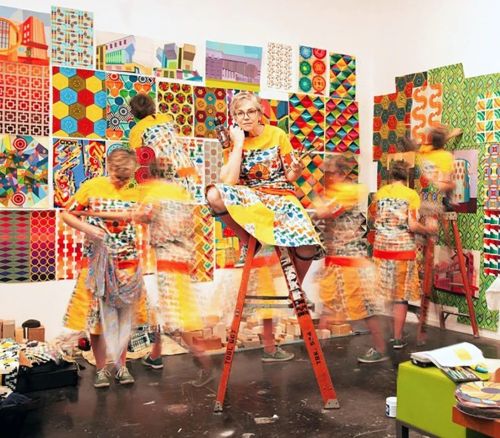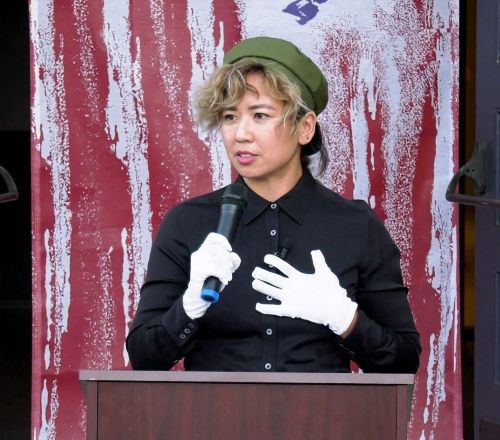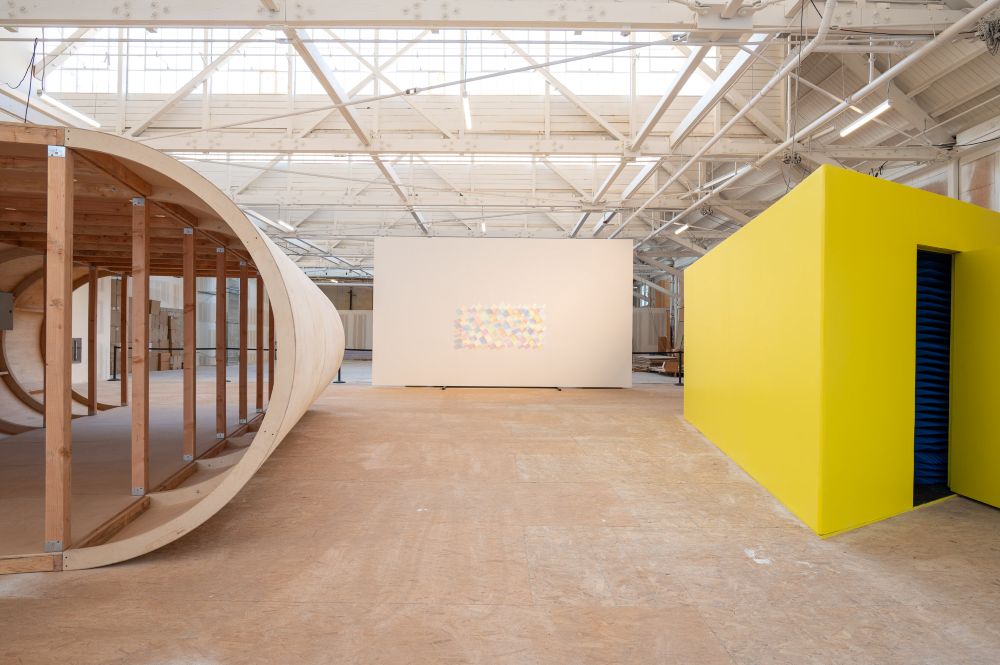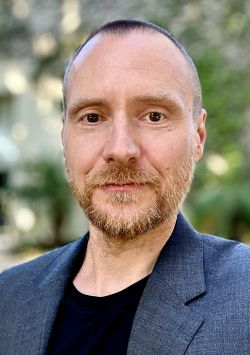
Courtesy of Crenshaw Dairy Mart. Photographed by Elon Schoenholz and Angel Xotlanihua.
Echosystems
Resonant Practices by Artists of the Crenshaw Dairy Mart
Oto-Abasi Attah, Ashley Blakeney, Patrisse Cullors, alexandre ali reza dorriz, and
noé olivas
August 24 - November 6, 2026
Chapman University’s Guggenheim Gallery
Please join us for the campus reception on Wednesday, September 2, 2026, from 4:00–7:00 PM, and the artist reception on Sunday, September 6, 2026, from 3:00–6:00 PM.
We also invite you to the Bensussen Lecture in the Arts with artists of the Crenshaw Dairy Mart collective: Oto-Abasi Attah, Ashley Blakeney,
Patrisse Cullors, alexandre ali reza dorriz, and noé olivas, on Thursday, November 5, 2026, from 7:00–8:00 PM in the George W. Bush Conference Room
in Beckman Hall.
 Courtesy of Crenshaw Dairy Mart. Photographed by Elon Schoenholz and Angel Xotlanihua.
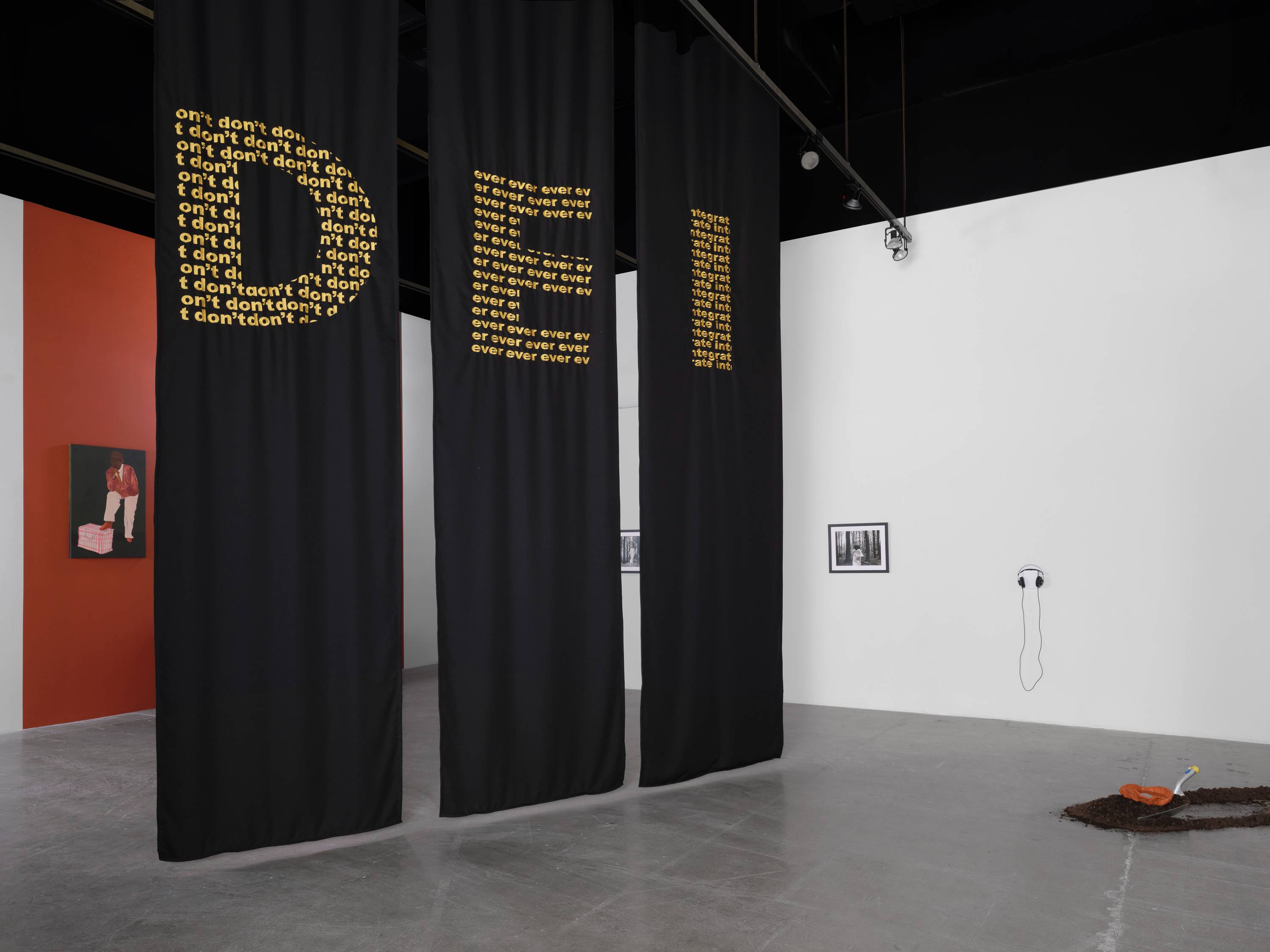
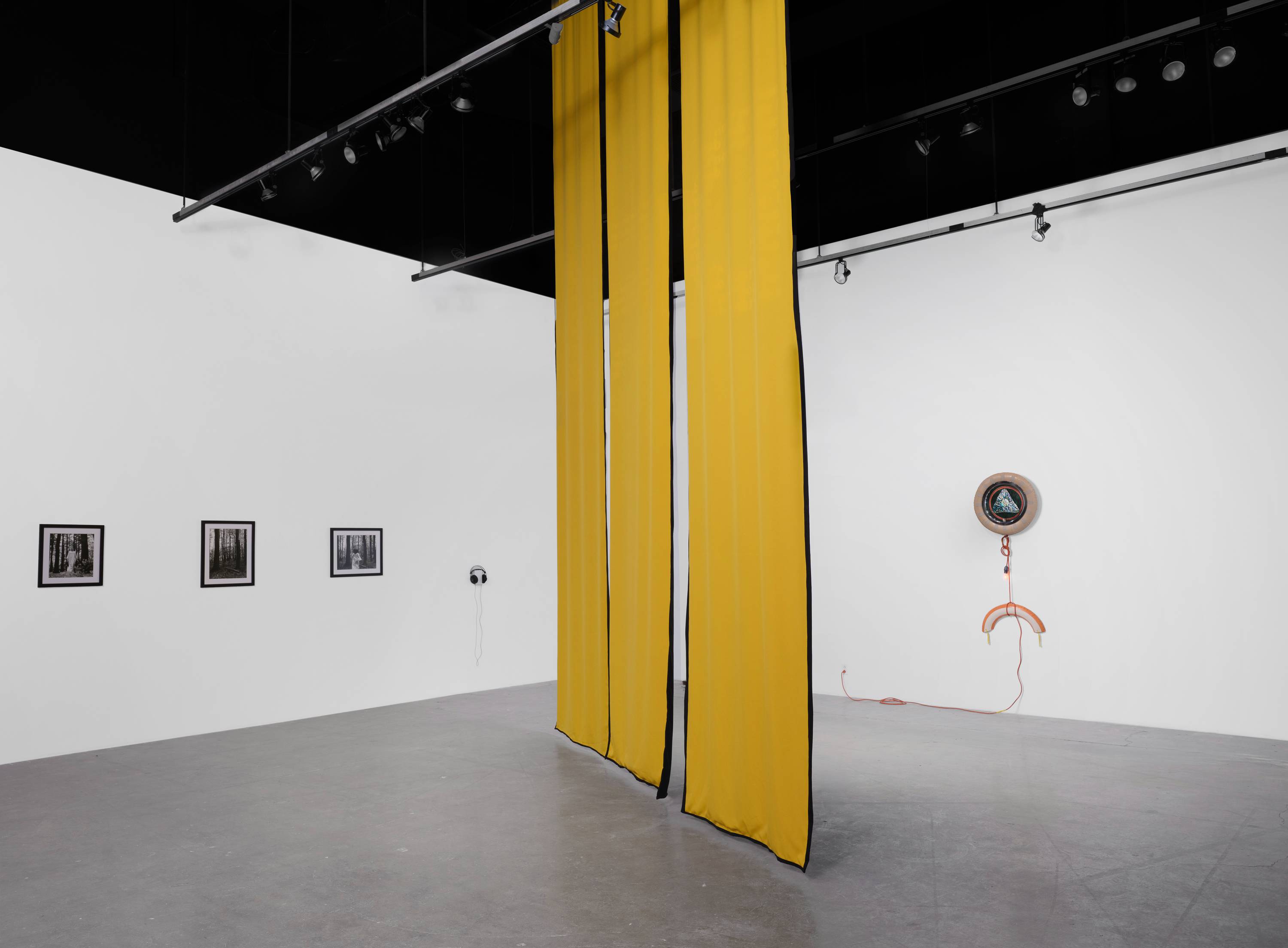
The Guggenheim Gallery presents Echosystems, the first exhibition to bring together the work of members of the Crenshaw Dairy
Mart collective (CDM): Oto-Abasi Attah, Ashley Blakeney, Patrisse Cullors, alexandre
ali reza dorriz, and noé olivas. Presented as part of Chapman University's Engaging the World: People and Communities in Motion initiative and in conjunction with the Bensussen Guest Lecture Series in Art, the exhibition contributes to a university-wide exploration of movement, belonging,
public life, and collective action through the lens of contemporary art.
Founded in Los Angeles as an artist-run gallery, collective, and cultural space rooted
in ancestry, abolition, and healing, CDM bridges exhibition making, artistic practice,
and community building. Each artist brings a distinct body of work shaped by personal
histories, cultural memory, and sustained social engagement. In dialogue, these practices
offer a portrait of Crenshaw Dairy Mart through the artists who are shaping its vision,
revealing the creative ecology from which its exhibitions, collaborations, and public
programs emerge.
Working across sculpture, painting, photography, performance, sound, installation,
and archival media, the artists explore ancestry, labor, grief, healing, spirituality,
land, and transformation. Drawing on family histories, lived experience, archival
research, and community engagement, their works consider how memory is carried through
bodies, materials, images, and place. Together, they reveal art as a means of preserving
cultural knowledge and cultivating relationships across communities and generations.
 Courtesy of Crenshaw Dairy Mart. Photographed by Elon Schoenholz and Angel Xotlanihua.
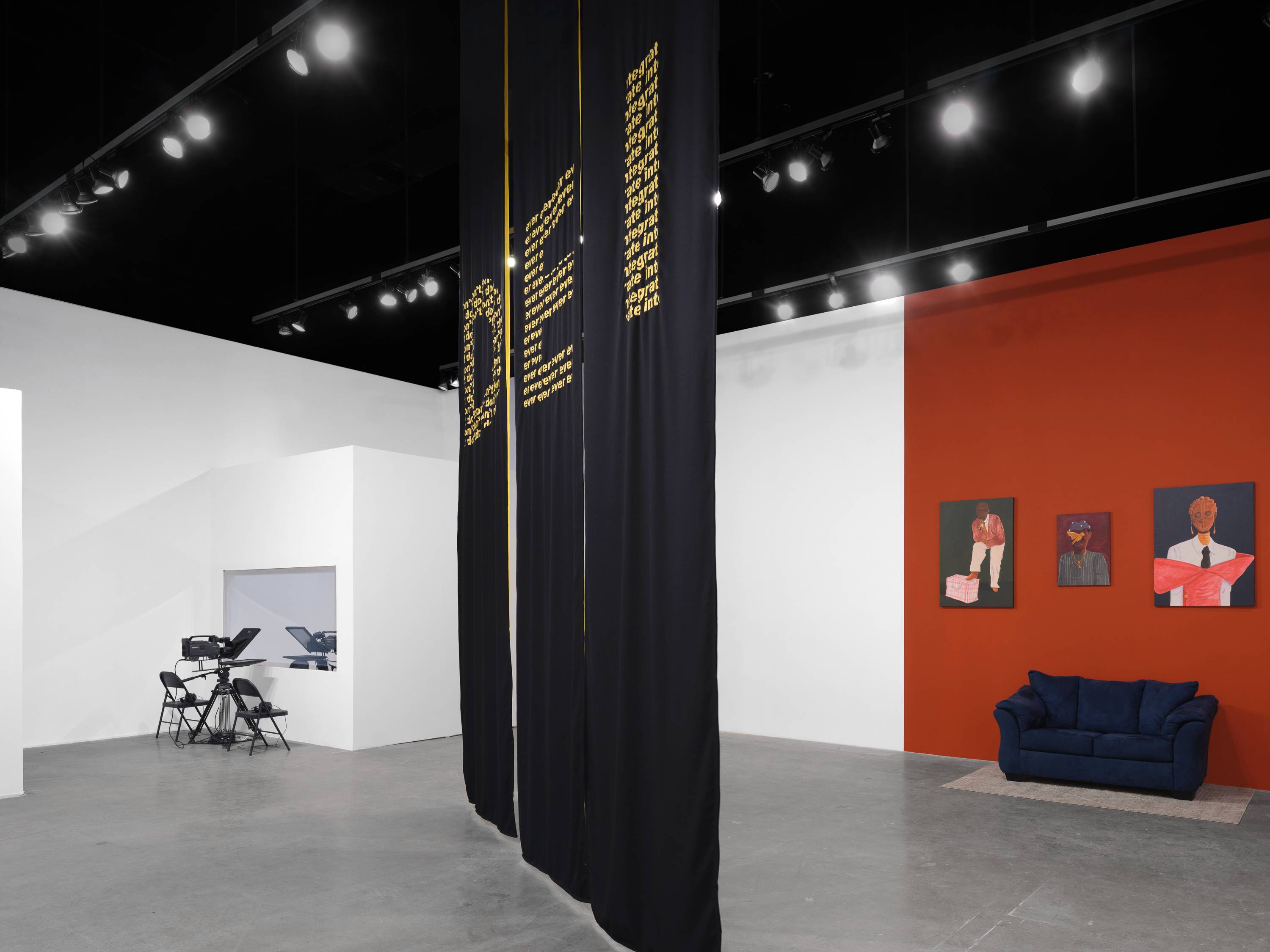
Oto-Abasi Attah's paintings explore identity, migration, cultural inheritance, and the search for belonging
through carefully rendered figures that weave together contemporary portraiture with
African ceremonial traditions and symbolic forms. Shaped by his experiences as the
son of Nigerian immigrants, Attah reflects on aspiration, family, and the transmission
of cultural knowledge across generations, considering how identity is continuously
formed through memory, ritual, and lived experience. Masks, garments, hats, travel
bags, and other personal objects become vessels for stories of movement, resilience,
and self-fashioning, affirming indigenous cultural forms as living traditions rather
than historical artifacts. Working with a restrained palette and contemplative visual
language, Attah creates intimate spaces where personal narratives intersect with collective
memory. Echosystems presents a new body of paintings centered on the mask as a site of ceremony, cultural
continuity, and transformation, offering an early look at Attah's evolving exploration
of how ancestral knowledge continues to shape contemporary identity and collective
imagination.
Ashley Blakeney's interdisciplinary practice brings together photography, poetry, music, education,
and arts healing to explore memory, creative inheritance, and collective care. Drawing
from family archives, personal experience, and collaborative practice, she examines
how images, sound, and storytelling reconnect fractured histories while creating new
forms of belonging. Her work often returns to photographs, places, and relationships
across generations, retracing and reconstructing moments that blur the boundaries
between past and present. Photography, writing, and music become spaces where grief,
remembrance, and artistic lineage unfold together, revealing memory as a living process
shaped by repetition, interpretation, and care. Through workshops, performance, and
image-making, Blakeney creates opportunities for collective reflection and participation,
inviting audiences to consider how artistic practice can deepen empathy, transform
personal histories into shared experiences, and imagine new possibilities for healing
and connection.
Patrisse Cullors works across performance, textile, installation, film, and personal archives to explore
ancestry, spirituality, Black self-determination, and collective transformation. Drawing
from Yoruba traditions, family histories, and lived experience, her practice considers
how memory is carried through bodies, materials, ritual, and landscape. Textile, hand-stitching,
cowry shells, and archival materials become sites where histories of grief, resilience,
resistance, and belonging converge, connecting intimate acts of remembrance to broader
social and political histories. Through monumental installations and performance,
Cullors transforms these materials into spaces for reflection, ritual, and collective
imagination, challenging inherited systems of power while affirming Black life, cultural
continuity, and the enduring presence of ancestral knowledge. By weaving together
personal narratives with shared histories, her work invites viewers to consider how
remembrance, refusal, and acts of liberation can shape more just and expansive futures.
alexandre ali reza dorriz's interdisciplinary practice spans photography, film, installation, and text, examining
how legal and economic systems shape relationships between natural resources, such
as land and water. Drawing from legal doctrines and financial markets, his work traces
the infrastructures of extraction and the ways they continue to define contemporary
landscapes. dorriz reveals systems of ownership, speculation, and resource diversion,
inviting viewers to reconsider landscapes as contested sites where ecological, political,
and cultural histories converge.
noé olivas transforms everyday materials, including tires and industrial objects, through the
Chicanx spirit of rasquachismo and the Black Assemblage Movement of the 1960s and
1970s. By creating new forms from existing materials, his work reflects on the poetics
and realities of labor, family histories, spiritual traditions, and the visual culture
of Southern California. His tire sculptures draw upon the histories embedded within
the tire industry and its lasting impact on both communities and the environment.
Embracing traditions of upcycling and reuse, olivas reimagines discarded tires, materials
commonly transformed into décor, planter pots, retaining walls, and signage, by using
clay to create sculptural forms that carry new meaning. Through these transformations,
familiar objects become vessels of hope, resilience, and renewal, creating space for
reflection on our relationship to labor, the environment, and the possibilities of
transformation.
Together, Echosystems offers a portrait of Crenshaw Dairy Mart through the individual practices that are
shaping its vision. The exhibition reveals the creative relationships, shared commitments,
and ongoing exchange that connect these practices within CDM as an artist-run gallery,
collective, and cultural space.
Crenshaw Dairy Mart Mission
Just South of Manchester and off of Crenshaw stands tall a former dairy mart, home
to an artist collective and art gallery dedicated to shifting the trauma-induced conditions
of poverty and economic injustice, bridging cultural work and advocacy, and investigating
ancestries through the lens of Inglewood and its community.
What these black and transnational identities seek is an imagination of new collective
memory through programming, events, and arts installations which cultivate and nurture
communal arts and education.
The Crenshaw Dairy Mart emerges from an investment in abolition, modes of accessibility
in art practice, and weaving community solidarity through new memories.
Chapman University’s Guggenheim Gallery advances contemporary art through exhibitions and programs that bring artists and
their work into dialogue with students, faculty, and the broader university community.
The Gallery provides a platform for artists whose practices challenge conventions,
expand the field, or are difficult to produce and present within traditional institutional
and commercial contexts.
Chapman University’s Department of Art prepares students to develop creative practices across Studio Art, Design, Art History,
and interdisciplinary fields. With practicing artists, designers, and scholars as
faculty, the Department combines technical expertise, creative inquiry, and critical
engagement with the histories and theories of art and visual culture, providing a
foundation for lifelong creative work.
With the annual Engaging the World Series, Wilkinson College of Arts, Humanities, and Social Sciences is committed to leading the conversation in our community on issues of humanity, unity
and justice. As such, the college has undertaken, semester-long examinations of key
societal issues. These interdisciplinary, campus-wide conversations promote thoughtful
dialogue; mindful reflection; social tolerance; awareness and respect; peace and kindness.