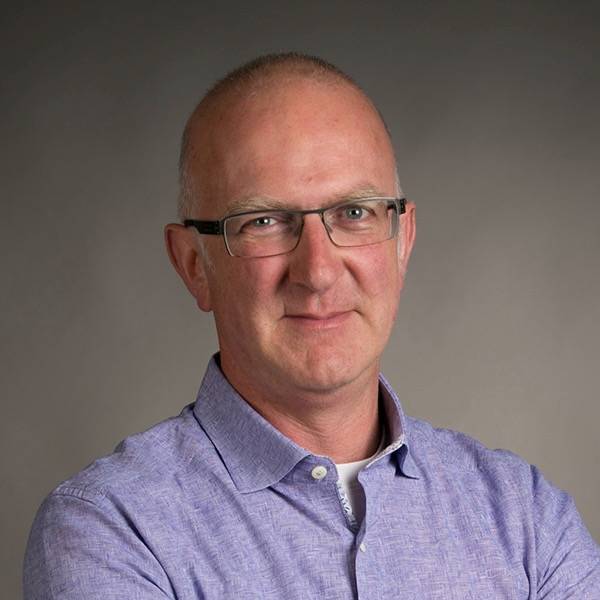
»Michael Ibba, Ph.D.
Dr. Ibba obtained his undergraduate degree in Biochemistry from Imperial College in London and completed his PhD in microbial biochemistry at the University of Manchester. After graduating, he undertook both industrial and academic post-docs in Switzerland (at Novartis and the ETH Zürich), and the US (Yale University) before establishing his own independent research group at the University of Copenhagen, Denmark in 1998. In 2001 he moved his lab to the Ohio State University where he taught for 19 years. At Ohio State he rose through the ranks from Assistant to Full Professor. He also held several key leadership roles at Ohio State, including Chair of the Microbiology Department, Associate Director for the Infectious Disease Institute, and Co-director of an NIH-funded graduate training program. In 2020 Dr. Ibba moved to Chapman University where he served as the Dean of Schmid College of Science and Technology from 2020 to 2025.
He has published over 200 research articles, obtained over $15M in extramural funding and served as editor for various scientific journals. He has received numerous awards and distinctions for his work, notably, the Distinguished Scholar Award at The Ohio State University in 2019 and the Faculty Enhancement Award in the College of Arts and Sciences in 2017 and 2020. He was also recognized as chair of the National Science Foundation Federal Advisory Committee for Biological Sciences from 2022 to 2025 and is a fellow of the American Academy of Microbiology and the American Association for the Advancement of Science. He currently chairs the American Society for Microbiology Committee on Graduate and Postdoctoral Education.
Dr. Ibba's research focuses on understanding the mechanisms that ensure the accurate translation of the genetic code and how changes in these processes in response to stress impact cellular health and viability. He was also a member of the leadership team of the National Science Foundation-funded EMergent Ecosystem Responses to ChanGE (EMERGE) Biology Integration Institute, which integrates research, training, and high-resolution field and laboratory measurements across 15 scientific subdisciplines and 14 institutions.