Conducting
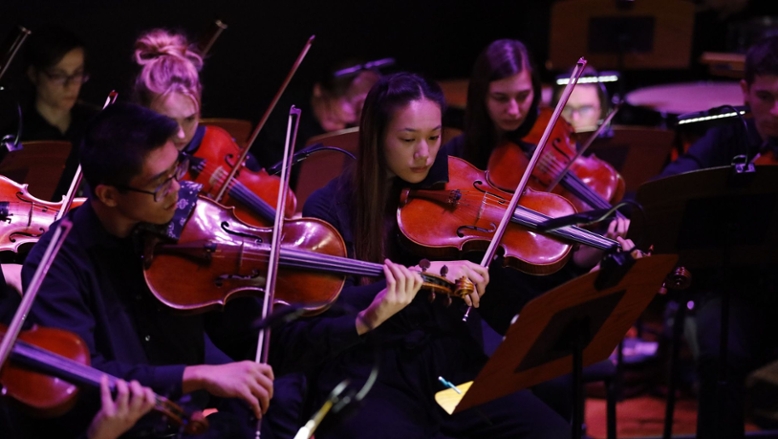
Chapman University Conservatory of Music is one of the few schools in the nation to offer an undergraduate degree in instrumental and choral conducting (BM in performance, conducting emphasis - choral or instrumental). The Conservatory is unique in that conducting students have the opportunity to conduct a full size orchestra or choir on a regular basis as part of their studies. Instrumental conducting students have the opportunity to conduct the Chapman Chamber Orchestra and Wind Symphony. In addition, a laboratory orchestra, comprised largely of instrumental performance majors, affords hands-on experience on a weekly basis. Similarly, choral conducting students have the opportunity to conduct the University Singers on a regular basis as part of their studies. Choral Conducting The choral conducting curriculum features intensive concentration in a number of important subject areas, including score study and analysis, score reading, aural skills, repertoire, gestural analysis, and rehearsal techniques. Students are regularly given time to conduct in front of the choir; this can be anything from conducting a run-through of a single composition to leading a complete rehearsal. Often conducting students are given the opportunity to work with student soloists, University Choir and the University Singers, both rehearsing and conducting performances on campus and during the January Interterm Tour. The capstone event in a conducting major’s career at Chapman is the Senior Recital. For the recital, the student not only conducts a concert, but completely rehearses the University Singers and even chooses (with some guidance) the repertoire for the concert. The student is generally allowed six weeks to prepare the choir, which usually takes place in the student’s final semester at Chapman. Students desiring to major in choral conducting must first apply for candidacy and then, after successfully completing Choral Conducting I and II (MUS 450 and MUS 451), may be considered for admission into the major. Admission into the choral conducting program is highly selective; the limited number of accepted students ensures regular podium time. Instrumental Conducting The instrumental conducting curriculum features intensive concentration in a number of important subject areas, including score study and analysis, score reading, aural skills, repertoire, gestural analysis, and rehearsal techniques. Students are also instructed in the proper preparation of orchestral parts and are expected to intern in the Instrumental Music Library. This thorough approach to musical development provides students with a firm grounding in the materials and techniques they will need as mature artists. All components of the program are designed to culminate in the senior recital, a public concert which the student plans, rehearses, and conducts with one of the large instrumental ensembles. The rigorous program is designed to prepare students for careers as exemplary school band and orchestra conductors, or to assist in gaining acceptance to any of the leading graduate conducting programs in the United States and abroad. Students desiring to major in instrumental conducting must first apply for candidacy and then, after successfully completing Instrumental Conducting I and II (MUS 452 and MUS 453), may be considered for admission into the major. Admission into the instrumental conducting program is highly selective; the limited number of accepted students ensures regular podium time. |
|
|
|
|