- elaskary@chapman.edu
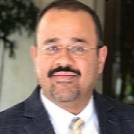 Keck Center for Science and Engineering 295Dr. El-Askary views himself as an earth system scientist with a major interest in natural hazards, atmospheric events and using renewable energy as the only way to address global climate change issues. His research interests include dust storms monitoring and detection using different remote sensing technologies as well as studying other extreme events. He is also involved in studying air pollution problems over megacities due to natural and man-made effects as well as climate change and its impacts on sea-level rise and coral reefs for coastal areas. His research included using earth observations in studying the impact of severe dust storms anomalous chlorophyll outbreaks in the marine environment, hurricanes intensification as well as transport of microbes causing Kawasaki disease outbreaks. Recently, Dr. El-Askary has been focusing on using earth observations for water resources management and precision agriculture, along with sustainable development goals.
He is the 2015 recipient of Chapman University's elite Senior Wang-Fradkin Professorship award. In 2016, he was named the regional coordinator on a $3 million euro grant from the European Union’s (EU) Horizon 2020. The three-year project, known as GEO-CRADLE, deals with coordinating and integrating state-of-the-art earth observation activities in the regions of North Africa, Middle East and Balkans, and developing links with GEO-related initiatives toward GEOSS. Through this work, his research team was able to deliver the first analytical solar atlas of Egypt that is now considered to be the official document of the government for solar investment. This work was recently presented at Planet Earth Institute at the Royal Society in London during a seminar that discussed the future of solar energy in Africa.
Dr. El-Askary has published over 100 refereed research publications, conference full papers and book chapters in these research areas. His research has been supported by the National Science Foundation, NASA, United States Department of Agriculture and the European Union. Dr. El-Askary has received the Saudi Arabia award hosted by the Arab Administrative Development Organization (ARADO) affiliated with the League of Arab states for the best-published article in Environmental Management among 150 articles in 2006. He is also a member of the Institute of Electrical and Electronics Engineers (IEEE), AGU, EGU, COSPAR and Phi Beta Delta Honor Society.
Dr. El-Askary has been featured in the Old Towne Orange Plaza Review and the United Nations Office for Outer Space Affairs website. /our-faculty/files/curriculum-vita/ElAskary-Hesham-CV.pdfpr@chapman.eduelaskary@chapman.edu(714) 289-2053http://sites.chapman.edu/elaskary/