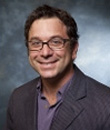
<?xml version="1.0" encoding="UTF-8"?><item href="/our-faculty/david-pincus.aspx" dsn="faculty"><email>pincus@chapman.edu</email><image-overwrite><img src="/our-faculty/files/small-photos/faculty/Pincus_D.jpg" alt="David Pincus"/></image-overwrite><name-overwrite>Dr. David Pincus</name-overwrite><rank-overwrite>Professor; Chair of Psychology</rank-overwrite><departments-overwrite/><expertise-overwrite/><office-hours-overwrite/><office-location-overwrite><span>Crean Hall Crean Hall 111</span></office-location-overwrite><scholarly-works-links-overwrite><p><a href="https://scholar.google.com/citations?user=qBAQDY0AAAAJ&amp;hl=en">Google Scholar</a></p>
<p><a href="https://digitalcommons.chapman.edu/do/search/?q=author_lname%3A%22Pincus%22%20AND%20author_fname%3A%22David%22&amp;start=0&amp;context=5695533&amp;sort=date_desc&amp;facet=">Digital Commons</a></p></scholarly-works-links-overwrite><degrees-overwrite/><bio-overwrite><p><iframe src="https://www.youtube.com/embed/en80wRsj8yQ" width="560" height="314" allowfullscreen="allowfullscreen"/></p>
<p> </p>
<p>Dr. Pincus obtained his Ph.D. in Clinical Psychology at Marquette University in Milwaukee Wisconsin. His internship and post-doctoral clinical training was completed in community mental health settings, including a post-doctoral fellowship through The UC Davis Department of Psychiatry in Child Psychology. Dr. Pincus spent a number of years prior to his graduate training (more than 13,000 supervised clinical hours in total pre and post-doctoral experience) working with adults, children and families in various community based agencies.</p>
<p><strong>Professional Memberships</strong></p>
<ul>
<li>President of Society for Chaos Theory in Psychology and Life Sciences (2011-2013)</li>
<li>Member of American Psychological Association and Division 38 (Health Psychology)</li>
<li>Member of Association for Psychological Science</li>
<li>Society for Chaos Theory in Psychology and Life Sciences (secretary 2004-2005)</li>
<li>American Psychological Association</li>
<li>Orange County Psychological Association (board member 2005-2007)</li>
</ul>
<p><strong>Courses Offered</strong></p>
<ul>
<li>Theories of Personality</li>
<li>Theories and Techniques of Psychotherapy for Marriage and Family Therapists</li>
<li>Diagnosis and Treatment of Children and Adolescents/Child Abuse Reporting</li>
<li>Abnormal Psychology</li>
<li>Introduction to Clinical Psychology</li>
<li>Clinical Practicum Supervision</li>
</ul>
<p><strong>Research and Scholarship</strong></p>
<ul>
<li>Nonlinear dynamical systems theory in psychotherapy process</li>
<li>Family therapy process research</li>
<li>Imagery therapy for pain management</li>
<li>Behavioral medicine in child health and fitness</li>
</ul>
<p>During his graduate training, Dr. Pincus developed and began testing an integrated and generic model of family systems, group, and individual therapy process. His theory and methodology are based upon recent updates to general systems theories referred to as nonlinear dynamical systems theory. His research has demonstrated that the dynamics of verbal conversation patterns within families and within therapy groups are similar to patterns observed in other complex systems in nature known as self-organizing systems. These systems include earthquakes, population dynamics, traffic jams, and branching patterns in biological structures (e.g., neurons, plant-life). Flowing from his graduate research, Dr. Pincus has continued to test, expand and refine his model of relationship dynamics.  In addition to understanding the complex dynamics that underlie human relationships, Dr. Pincus has applied nonlinear research to the understanding of biopsychosocial systems involved in areas such as pain and childhood obesity.</p></bio-overwrite><scholarly-works-overwrite/><cv>/our-faculty/files/curriculum-vita/david-pincus.pdf</cv><media-contact>pr@chapman.edu</media-contact><lecture-requests>pincus@chapman.edu</lecture-requests><phone>(714) 744-7917</phone><website/></item>